Faithful Stewardship, Forward with Hope

Mr. Dan BurkPrincipal
May 8, 2026

3 Minute Read


At St. Matthew Lutheran Church and School, we are continually reminded that everything we have is a gift from God—and with those gifts comes the opportunity to faithfully steward the resources He has entrusted to us. As we reflect on our current financial picture, we want to share an honest, transparent, and hopeful update with our congregation and school families.

First, there is much to celebrate.

Our school continues to be a strong and stable part of our ministry. Tuition, registration, and school-related accounts are performing well and providing consistent support for day-to-day operations. This is a direct reflection of the commitment of our families, the strength of our programs, and the value placed on Christian education. St. Matthew Lutheran School remains a vital mission of our church, and we are truly blessed to see that stability reflected in our finances. It speaks volumes about the partnership between our church and school and the shared commitment to raising up the next generation in faith and knowledge.

We also want to take a moment to recognize and give thanks for our faithful givers. Week after week, month after month, there are so many within our congregation who give consistently and sacrificially to support this ministry. Your faithfulness does not go unnoticed. You are the foundation that allows ministry to happen every single day. In addition, there have been many moments when needs have arisen—whether expected or unexpected—and individuals and families have stepped up in incredible ways. Those special gifts, acts of generosity, and willingness to respond when called upon are a powerful testimony to the heart of this congregation. God is truly working through His people here at St. Matthew.

At the same time, we also recognize areas where we must continue to grow. Like many churches and schools today, we are navigating rising costs in operations, staffing, and facility maintenance. From utilities to building upkeep to program needs, the cost of ministry continues to increase. While we are managing these responsibilities and meeting many of our needs, there are times when expenses stretch beyond our regular giving patterns. This simply reminds us that faithful stewardship is an ongoing journey for all of us.

Yet even in this, we remain confident and hopeful.

Why? Because time and time again, God has provided through His people. Whether it has been through consistent weekly offerings, special gifts, or the strong support of our school families, we have seen His provision at work. Our financial story is not one of scarcity—it is one of faith, trust, and opportunity. God continues to open doors, provide resources, and place people in our path who believe in the mission of St. Matthew.

As we look ahead, we are encouraged to continue growing together in faithful stewardship. Stewardship is not simply about meeting a budget—it is about participating in God’s mission. Every gift, every act of generosity, and every decision to give back to God is part of something much bigger than ourselves. It supports worship, Christian education, outreach, and the daily ministry that impacts lives for eternity.

We give thanks for the many ways our congregation already supports this ministry so faithfully. Because of that support, students are hearing about Jesus, families are being served, and our church remains a place where people can grow in their faith.

And as we move forward, we simply invite everyone to continue praying, reflecting, and considering how God may be calling each of us to be part of that mission in even greater ways.

Together, with faith and trust in Him, the future of St. Matthew remains strong.

Up Next
From this Author: Mr. Dan Burk
May 8, 20264 Minute Read
A Legacy Built in Faith: Remembering Our New Church
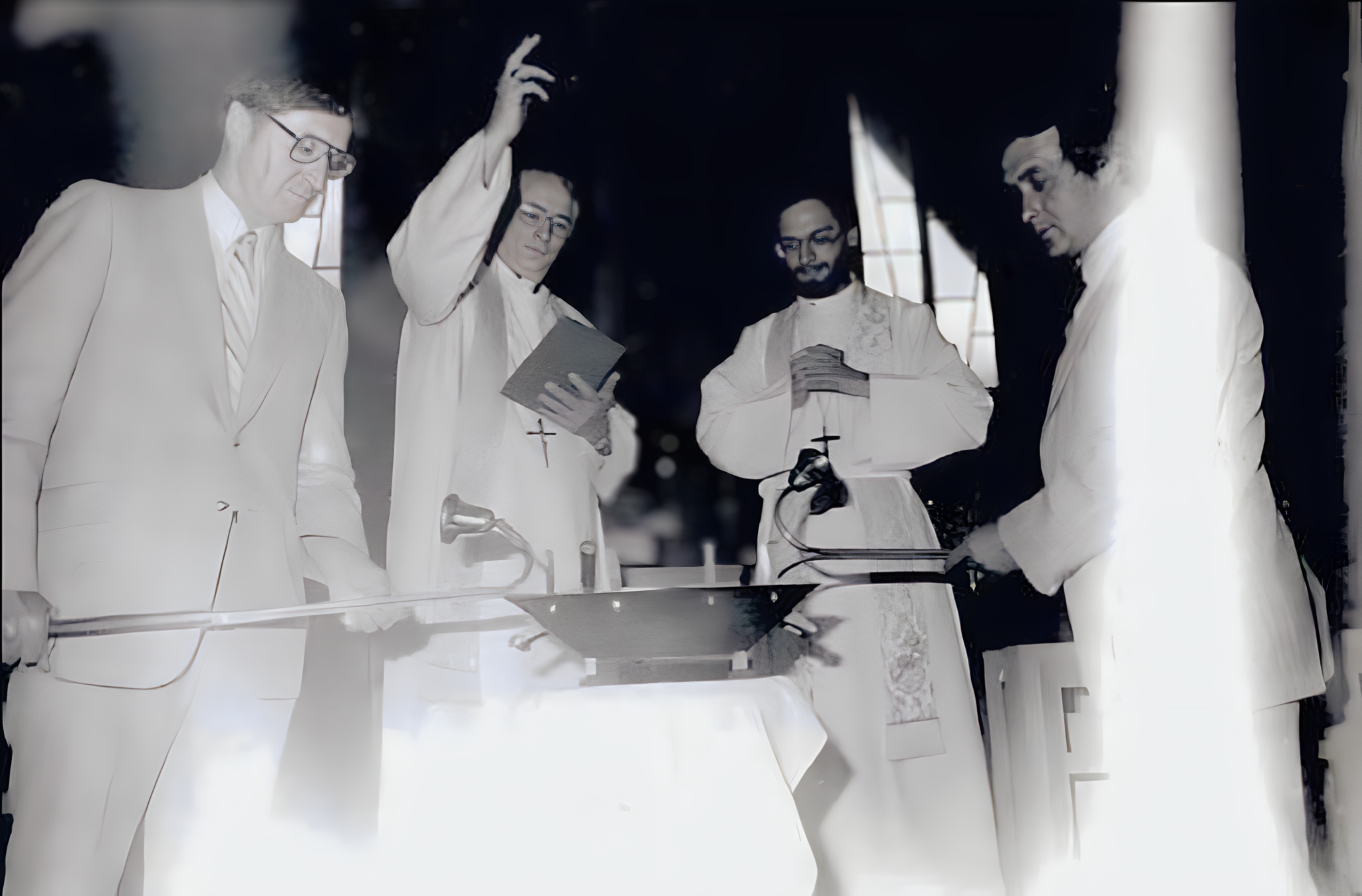
As we continue to celebrate our 90th anniversary at St. Matthew, we look back with gratitude on the moments that shaped who we are today. One of those defining moments came on May 16, 1965, with the dedication of what was then our “new church.” What was once new is now part of a rich legacy—a testament to faith, vision, and the blessings of God. At the time, the new church complex was more than just a building—it was a bold step forward in ministry. Situated on a beautiful five-acre wooded property, the campus was thoughtfully designed to serve not only as a place of worship, but as a center for education, fellowship, and community life. The complex included three main parts: the church sanctuary, an educational unit with classrooms and offices, and an activities and fellowship building. Even then, there was a clear vision that St. Matthew would be a place where people could gather, learn, grow, and serve together. The church itself was built with a contemporary design, using natural materials like wood, brick, and fieldstone to blend seamlessly into the surrounding landscape. It was intentionally crafted to reflect both beauty and purpose. The heart of the sanctuary was—and still is—the chancel. With the altar at its center and a large cross rising above it, the design draws the eyes and hearts of worshippers to Christ. The architectural elements, including the seven columns rising behind the chancel, create a sense of reverence and awe, reminding all who enter of God’s presence. Every detail of the space was thoughtfully planned. As you moved away from the chancel, the church widened and rose in height, creating an open and welcoming space for worship. The craftsmanship of the woodwork, including a unique screen made of oak, cherry, and mahogany, added both warmth and character. Even practical elements—like ventilation, lighting, and layout—were carefully considered to support a growing congregation. Beyond the sanctuary, the educational unit reflected a commitment to Christian education that continues to define St. Matthew today. With classrooms ready to serve students and space designed for future growth, it was clear that the congregation saw education as a vital part of its mission. That vision has carried forward through the decades and continues to impact students and families in powerful ways. The activities and fellowship building further demonstrated the congregation’s understanding of community life. Designed for athletics, gatherings, and events, it featured spaces for basketball, fellowship, and shared meals. It was more than a building—it was a place where relationships would be built and strengthened. None of this would have been possible without the dedication and generosity of so many. From the architects and builders to members of the congregation who gave their time and resources, this project was truly a labor of love. Special thanks were given to individuals like John Sawyer for his commitment, and to Dr. W. H. Kern and his wife, Iola, for their generous gift of land—an incredible blessing that helped make this vision a reality. Just a couple of years later, in 1967, the dedication of the church organ added yet another layer to the worship life of St. Matthew. Built by the Fouser Pipe Organ Company, the instrument enhanced the beauty of worship and continues the tradition of lifting voices in praise. As we reflect on this chapter of our history, we are reminded that those who came before us stepped out in faith. They built not just for their time, but for the future. Today, we are the beneficiaries of that vision and faithfulness. And just as they once looked ahead with hope, so do we. As we celebrate 90 years of ministry, we give thanks for the foundation that was laid and the countless lives that have been touched within these walls. May we continue to build—on that same foundation of faith—trusting God to guide us into the future.
May 8, 20263 Minute Read
The “90 Days of May”: A Season of Celebration, Growth, and Gratitude
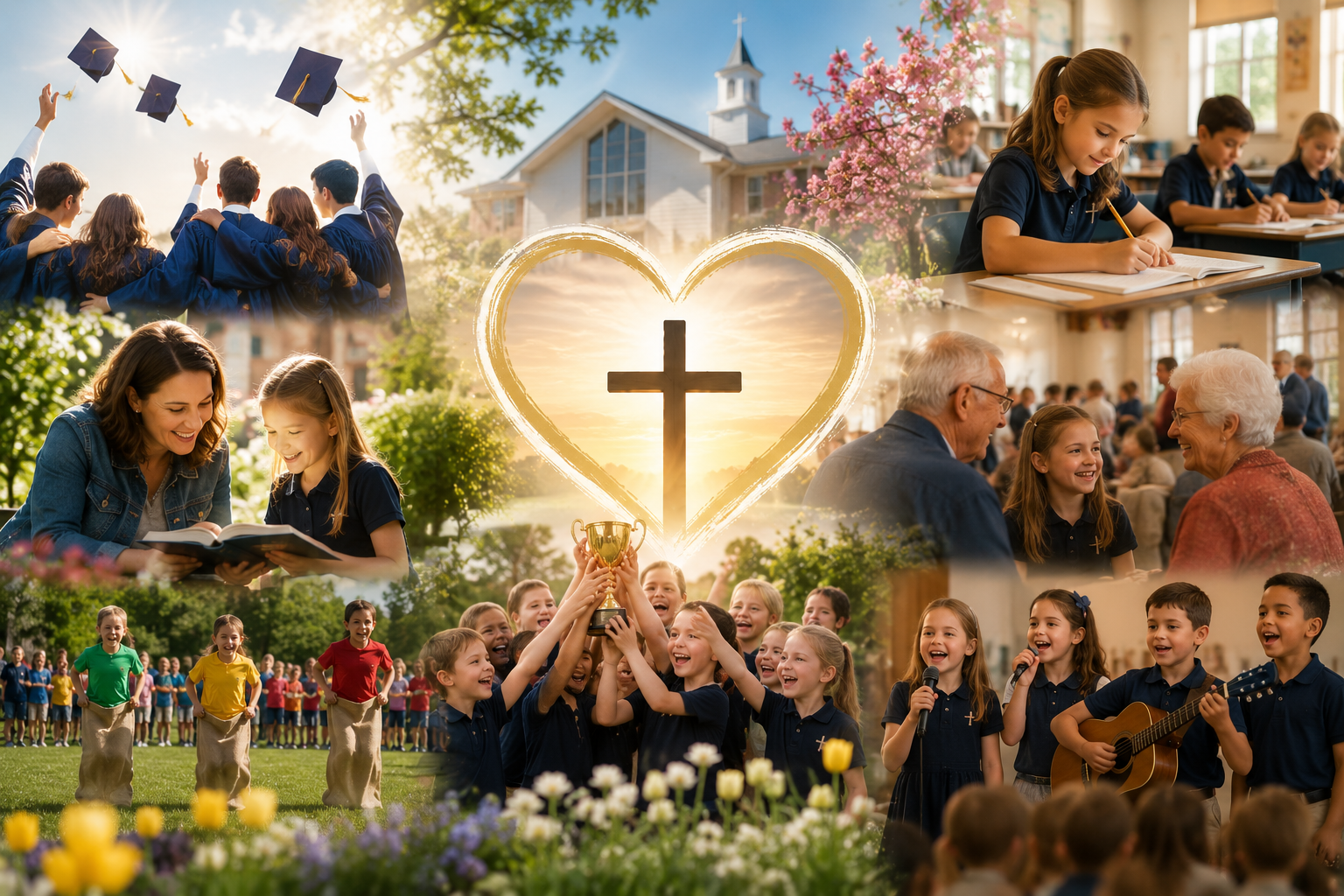
In education, there’s a phrase you may have heard before—*the “90 days of May.”* While the calendar may say just one month, anyone in a school knows that May is filled from beginning to end. It’s a fast-moving, yet full and meaningful stretch of time that captures so much of what makes our school community special. At St. Matthew, May is a beautiful reminder of the blessing it is to walk alongside our students and families, sharing the love of Christ each and every day. It’s a month where learning, faith, and celebration all come together. One of the most meaningful parts of this season is celebrating our 8th grade class. For many of these students, St. Matthew has been their home for 10 or even 11 years. Watching them grow from young children into confident, faith-filled leaders has been an incredible journey. As part of their final weeks, our 8th graders write and share their Faith Statements during a special Chapel service. This is always a powerful moment—not just for them, but for our entire school—as they boldly share what they believe and how their faith has been shaped during their time here. In addition, a number of our 8th graders will be confirmed in the Lutheran faith. This important step marks a deeper commitment in their walk with Christ and is a testament to the spiritual foundation that has been built over the years. May also brings one of our most joyful traditions—VIP Day. On this special day, students invite someone important in their life—whether it’s a grandparent, aunt, uncle, or family friend—to join them at school. Our students love the opportunity to perform songs for their VIPs, welcome them into their classrooms, and share a glimpse of their daily life. The day ends with a Closing Chapel, bringing everyone together in worship and thanksgiving. Another highlight is Field Day, where laughter, teamwork, and friendly competition take center stage. It’s a day where students can showcase their talents, enjoy time outdoors, and simply be kids—celebrating the joy of community and togetherness. Amid all the excitement, May is also an important academic time as we complete our Spring NWEA testing. These assessments help us measure the growth our students have made throughout the year. Even at this point in testing, the results have been incredible. Looking at our first-grade class alone, the growth has been truly remarkable—a clear reflection of the hard work of our students and the dedication of our teachers. As we begin to look ahead to June, the celebrations continue. The final week of school is filled with events that honor our students and all they have accomplished. One of those special moments is our Raider Invite-Only Dinner, where we recognize students who have gone above and beyond—whether through academic achievement, being named Student of the Month, or earning state-level honors in athletics. When we take a step back and look at all that has happened this year, one thing is clear: none of this would be possible without you—our church and school community. Your support, encouragement, and love for our students make a lasting impact every single day. So as we move through the “90 days of May,” we do so with full hearts. Thank you. Thank you for your prayers. Thank you for your support. Thank you for being part of the St. Matthew family. From the bottom of my heart—thank you.
Currently Reading
May 8, 20263 Minute Read
Faithful Stewardship, Forward with Hope
At St. Matthew Lutheran Church and School, we are continually reminded that everything we have is a gift from God—and with those gifts comes the opportunity to faithfully steward the resources He has entrusted to us. As we reflect on our current financial picture, we want to share an honest, transparent, and hopeful update with our congregation and school families. First, there is much to celebrate. Our school continues to be a strong and stable part of our ministry. Tuition, registration, and school-related accounts are performing well and providing consistent support for day-to-day operations. This is a direct reflection of the commitment of our families, the strength of our programs, and the value placed on Christian education. St. Matthew Lutheran School remains a vital mission of our church, and we are truly blessed to see that stability reflected in our finances. It speaks volumes about the partnership between our church and school and the shared commitment to raising up the next generation in faith and knowledge. We also want to take a moment to recognize and give thanks for our faithful givers. Week after week, month after month, there are so many within our congregation who give consistently and sacrificially to support this ministry. Your faithfulness does not go unnoticed. You are the foundation that allows ministry to happen every single day. In addition, there have been many moments when needs have arisen—whether expected or unexpected—and individuals and families have stepped up in incredible ways. Those special gifts, acts of generosity, and willingness to respond when called upon are a powerful testimony to the heart of this congregation. God is truly working through His people here at St. Matthew. At the same time, we also recognize areas where we must continue to grow. Like many churches and schools today, we are navigating rising costs in operations, staffing, and facility maintenance. From utilities to building upkeep to program needs, the cost of ministry continues to increase. While we are managing these responsibilities and meeting many of our needs, there are times when expenses stretch beyond our regular giving patterns. This simply reminds us that faithful stewardship is an ongoing journey for all of us. Yet even in this, we remain confident and hopeful. Why? Because time and time again, God has provided through His people. Whether it has been through consistent weekly offerings, special gifts, or the strong support of our school families, we have seen His provision at work. Our financial story is not one of scarcity—it is one of faith, trust, and opportunity. God continues to open doors, provide resources, and place people in our path who believe in the mission of St. Matthew. As we look ahead, we are encouraged to continue growing together in faithful stewardship. Stewardship is not simply about meeting a budget—it is about participating in God’s mission. Every gift, every act of generosity, and every decision to give back to God is part of something much bigger than ourselves. It supports worship, Christian education, outreach, and the daily ministry that impacts lives for eternity. We give thanks for the many ways our congregation already supports this ministry so faithfully. Because of that support, students are hearing about Jesus, families are being served, and our church remains a place where people can grow in their faith. And as we move forward, we simply invite everyone to continue praying, reflecting, and considering how God may be calling each of us to be part of that mission in even greater ways. Together, with faith and trust in Him, the future of St. Matthew remains strong.

May 7, 20266 Minute Read
The Witness of Stephen: Following Christ Even in Opposition
Stephen's story from Acts 6-7 offers a powerful example of faithful witness in the face of persecution. His martyrdom wasn't just an ending—it was the culmination of a life dedicated to serving others and boldly proclaiming the truth about Jesus Christ. How Did Stephen Begin His Ministry? Stephen didn't start as a preacher or theologian. He was chosen for a practical need: serving widows in the early church. The twelve apostles were overwhelmed with the growing congregation's needs, particularly food distribution to widows in their community. They appointed seven men, including Stephen, to handle this vital service. But God had bigger plans. Through Stephen's faithful service in this seemingly simple role, God worked "great signs and wonders among the people." This demonstrates how God uses our everyday vocations—whether serving meals, teaching children, or working in an office—to accomplish His purposes. What Made Stephen's Defense So Powerful? When Stephen was brought before the Sanhedrin (the Jewish Supreme Court), he faced the same false accusations that Jesus had encountered. They accused him of blasphemy and speaking against Moses and the prophets. But Stephen, filled with the Holy Spirit, delivered a masterful defense that his opponents couldn't refute. Stephen's Historical Journey Through Scripture Stephen's sermon took his accusers on a journey through Jewish history, showing a consistent pattern: Abraham's Call: He reminded them that their father Abraham was originally a pagan from Ur of the Chaldeans (modern-day Iraq). God called him out of paganism to follow Him, making Abraham a sojourner who trusted God's promises without seeing their fulfillment. Joseph's Story: Stephen recounted how Joseph's brothers, driven by jealousy, sold him into slavery. Yet God was with Joseph, elevating him to second-in-command in Egypt. When famine struck, Joseph's brothers came seeking help, and Joseph forgave them—foreshadowing the forgiveness Christ offers. Moses the Deliverer: Stephen described how God raised up Moses to deliver His people from Egyptian bondage. Yet even after witnessing miraculous signs and wonders, the Israelites rejected Moses and created a golden calf while he received the law on Mount Sinai. The Pattern of Rejection Through this historical narrative, Stephen revealed a troubling pattern: God repeatedly delivered His people, yet they consistently rejected Him and His messengers. The prophets who called them to repentance were persecuted. The kings who tried to lead them back to God were opposed. Why Did Stephen's Message Provoke Such Anger? Stephen concluded his defense with a direct challenge: "You stiff-necked people, uncircumcised in heart and ears, you always resist the Holy Spirit, as your fathers did, so do you. Which of the prophets did your fathers not persecute? And they killed those who announced beforehand the coming of the Righteous One, whom you have now betrayed and murdered." This wasn't just a history lesson—it was an indictment. Stephen was telling them they were following the same pattern of rejection that had characterized their ancestors. They had rejected the ultimate Prophet, the Messiah Himself. How Did Stephen Face Death? The crowd's response was immediate and violent. They ground their teeth in rage and began stoning Stephen. But in his final moments, something remarkable happened. Stephen looked up and saw a vision of Christ standing at the right hand of God. This vision of the risen, glorified Christ gave him strength to face death with grace. Most significantly, as the stones struck him, Stephen prayed, "Lord, do not hold this sin against them." This prayer echoes Jesus' words from the cross: "Father, forgive them, for they know not what they do" (Luke 23:34 ESV). Even in his agony, Stephen demonstrated the transforming power of Christ's love. What Can We Learn About Witnessing for Christ? Stephen's example teaches us several crucial lessons about Christian witness: Faithfulness in Small Things: Stephen started by serving widows. God used his faithfulness in this practical ministry to prepare him for greater service. The Power of the Holy Spirit: When confronted by learned opponents, Stephen didn't rely on his own wisdom. The Holy Spirit gave him words that confounded his accusers. Courage in Opposition: Stephen didn't soften his message when facing a hostile audience. He spoke truth even when it cost him his life. Forgiveness for Enemies: Perhaps most challenging of all, Stephen prayed for those who were killing him. This supernatural response could only come from someone filled with Christ's love. Who Was Watching Stephen's Martyrdom? Among the crowd that day was a young man named Saul, holding the garments of those who stoned Stephen. This same Saul would later encounter the risen Christ on the road to Damascus and become the apostle Paul. Stephen's faithful witness, even unto death, planted seeds that would bear fruit in one of Christianity's greatest missionaries. What Does This Mean for Modern Christians? Stephen's story isn't just ancient history—it's a call to faithful witness in our own time. We may not face literal stoning, but we will encounter opposition when we stand for Christ's truth. The question is: will we respond with Stephen's courage and grace? Christ calls us to be witnesses in every role we fill—as parents, employees, neighbors, and church members. We don't need to deliver eloquent sermons like Stephen, but we can share the simple truth: "Christ died for me and everything I had done wrong, and He will do the same for you." Life Application This week, ask yourself: Am I faithfully serving Christ in the "small" roles He's given me? Stephen's ministry began with serving widows, but God used that faithfulness to prepare him for greater witness. Whether you're changing diapers, working at a desk, or teaching a class, God can use your faithful service as a platform for witness. Consider these questions as you reflect on Stephen's example: When faced with opposition to my faith, do I respond with grace or defensiveness? Am I prepared to share the simple truth of what Christ has done for me? Can I pray for those who oppose or mistreat me, as Stephen did for his executioners? How is God calling me to be a witness in my current circumstances, even if they seem ordinary? Stephen's witness reminds us that following Christ may be costly, but it's always worth it. The risen Christ who gave Stephen strength to face martyrdom is the same Christ who empowers us to live faithfully today.
July 16, 20244 Minute Read
Amos: A Prophet for Today's Busy World
In our fast-paced lives, it is easy to become overwhelmed with activities and distractions, making it difficult to hear God's voice. This challenge is not new; even in the time of Amos, the Israelites were distracted by their own prosperity and political stability, leading them away from God. Amos, a simple shepherd, was called by God to deliver a stern message to the Northern Kingdom of Israel, warning them of their spiritual complacency and impending judgment. Amos used the plumb line metaphor to illustrate how far the Israelites had strayed from God's standards. Just as a plumb line reveals whether a wall is straight, God's Word reveals the crookedness of our lives. The Israelites had built temples to false gods and trusted in their own achievements rather than in God. Amos' message was clear: true victory and prosperity come from God alone, and ignoring His Word leads to destruction. Our culture today mirrors that of ancient Israel. We are bombarded with distractions and false voices, from social media to non-stop news, which drown out God's Word. We must make a conscious effort to listen to what God is saying to us. Listening goes beyond hearing; it involves responding and living out God's commands in our daily lives. Through baptism, we are called to renounce the devil and his ways, but this renunciation must be evident in how we live. God's Word is not just to be heard but to be acted upon. The Holy Spirit works through the Word to lead us to repentance and transformation. As we partake in the Eucharist, we are reminded of the forgiveness of sins and the call to live out our faith. In a world filled with noise and distractions, we must prioritize listening to God's voice, allowing it to guide and shape our lives. **The Danger of Busyness**: Our lives are filled with activities and distractions that can drown out God's voice. This busyness can prevent us from confronting our own spiritual shortcomings and idols. We must intentionally create space to listen to God amidst the noise. The Plumb Line of God's Word: Just as a plumb line reveals the straightness of a wall, God's Word reveals the crookedness of our lives. Amos used this metaphor to show the Israelites how far they had strayed from God's standards. We must regularly measure our lives against God's Word to ensure we are aligned with His will, for this alignment is the key to a righteous life. **True Prosperity Comes from God**: The Israelites trusted in their political and economic achievements, but Amos reminded them that true victory and prosperity come from God alone. Earthly success is not a sign of God's favor if our hearts are far from Him. We must place our trust in God rather than in our own accomplishments. **Listening vs. Hearing**: Hearing God's Word is not enough; we must listen and respond. Listening involves acting on what we hear and allowing it to transform our lives. This distinction is crucial in our spiritual journey, as it determines whether we are merely hearers or doers of the Word. The Role of the Holy Spirit: The Holy Spirit, a constant companion in our spiritual journey, works through God's Word to lead us to repentance and transformation. As we engage with the Scriptures and partake in the sacraments, the Spirit renews our hearts and minds. We must be open to the Spirit's work, allowing it to guide us in living out our faith. In a world filled with distractions, Amos's message remains relevant. We must prioritize listening to God's voice, allowing it to guide and shape our lives. True prosperity and victory come from God alone; through His Word and the work of the Holy Spirit, we find transformation and renewal.