Search
Recent Posts
July 21, 2026 • 6 Minute Read
Groaning and Glory: What Romans 8 Teaches Us About Suffering and Hope
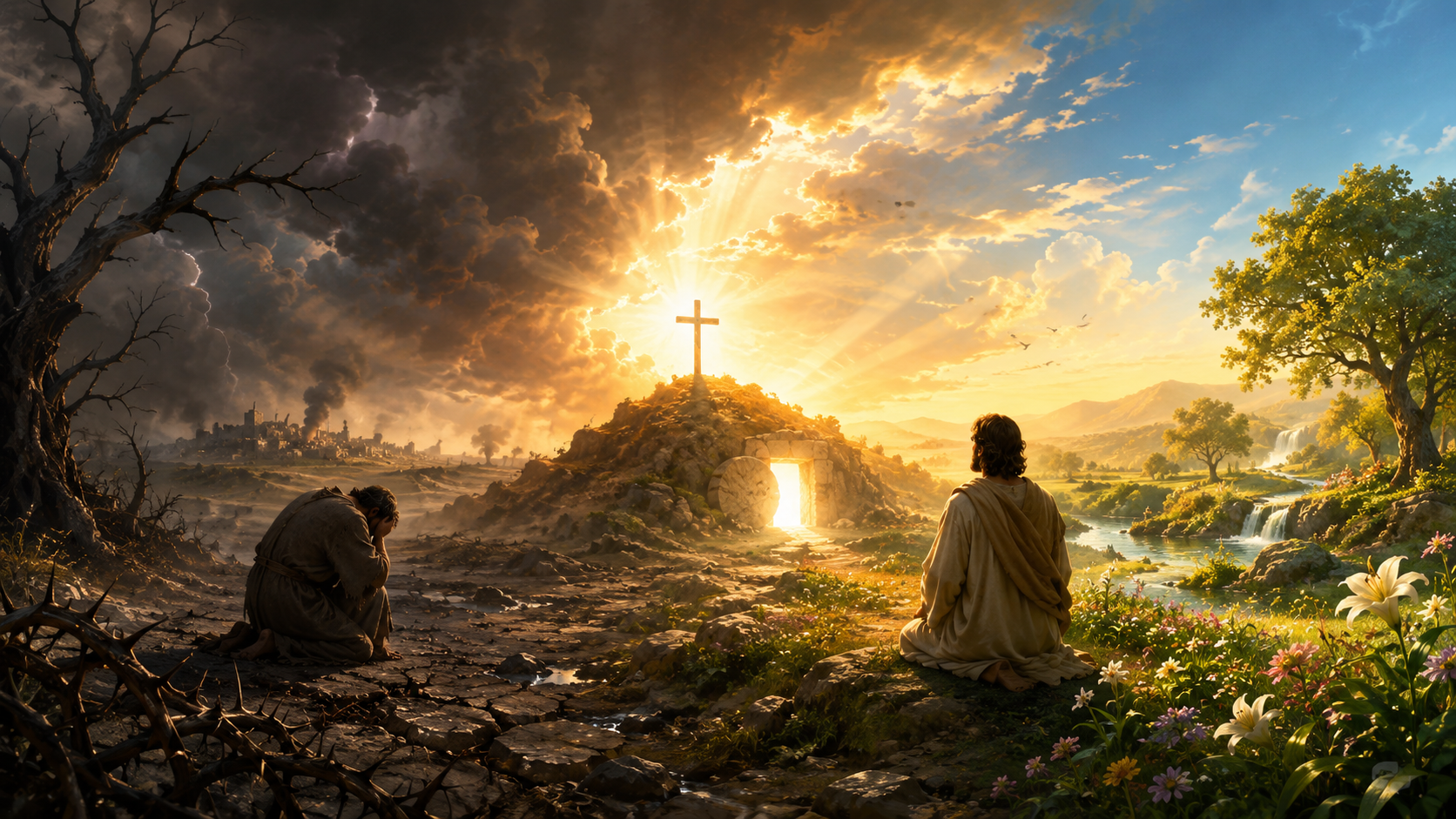
Life is full of pain that is sometimes too deep for words. Romans 8 speaks directly to that experience, offering a powerful contrast between the groaning we feel now and the glory that awaits us. This is not a message that dismisses suffering. It is a message that puts suffering in its proper place. Where Did All This Groaning Come From? The groaning we experience in this world did not happen by accident. It started in the Garden of Eden when Adam and Eve chose to eat from the one tree God had forbidden. At the heart of that choice was a desire for personal glory, a desire to become more like God on their own terms rather than waiting for what He had already planned to give them. Sin entered the world that day. And through sin, death followed. As Romans 1:23 (ESV) describes, humanity "exchanged the glory of the immortal God for images resembling mortal man and birds and animals and creeping things." Rather than looking upward to God, people turned inward to themselves and began worshiping the created rather than the Creator. That inward focus did not just affect people. It affected everything. Why Is All of Creation Groaning? Scripture tells us that all of creation groans because of the consequences of human sin. The weeds, the thorns, the wildfires, the pollution, the brokenness we see in the natural world are all connected to that original turning away from God. Creation is not just suffering passively. It is waiting. It is longing for something better, for the day when it will be restored and renewed. Even the smallest creatures and the natural world around us seem to be straining forward toward a future that has not yet arrived. Do Christians Groan Too? Yes. Paul is clear that believers also groan. This is not a sign of weak faith. It is an honest acknowledgment of what life in a broken world feels like. The suffering Paul points to here is not only spiritual pressure from persecution. It is the everyday weight of personal hardship: financial struggles, grief, loss, illness, and death itself. These are the things that bring us to our knees and sometimes leave us without words. That groaning is real. And God does not ignore it. What Happens When We Cannot Even Find the Words to Pray? This is one of the most comforting truths in all of Romans 8. When the pain is so deep that we cannot articulate it, we are not left alone. Romans 8:26 (ESV) says, "Likewise the Spirit helps us in our weakness. For we do not know what to pray for as we ought, but the Spirit Himself intercedes for us with groanings too deep for words." The Holy Spirit feels our pain and brings it before the Father. We close our prayers in Jesus' name because He is our mediator. But when we cannot even form the words, the Spirit steps in and intercedes on our behalf. The Father hears those groanings and knows the heart of every suffering child. That is not a small thing. That is the triune God actively caring for you in your lowest moments. How Does the Promise of Glory Change the Way We See Suffering? Paul does not leave us in the groaning. He lifts our eyes toward what is coming. Romans 8 presents a kind of balance scale, and the weight of future glory far outweighs the weight of present suffering. The promise began all the way back in Genesis 3:15 (ESV), when God told the serpent, "I will put enmity between you and the woman, and between your offspring and her offspring; He shall bruise your head, and you shall bruise His heel." That promise pointed directly to Christ. Satan bruised the heel of Jesus on the cross. But Christ rose from the grave, and Satan was defeated. The bruise did not stop Him. Because of that victory, the groaning we experience now is not the end of the story. What Does the New Creation Actually Look Like? Scripture does not give us every detail, but it does give us a direction. The hope we have is not simply about going to heaven when we die. It is about the new earth that Christ will bring when He returns. The theological picture that emerges is one of renewal rather than replacement. God will cleanse and reshape His original creation, restoring it to the goodness He declared at the beginning. He will come to dwell with His people on this renewed earth. We will not be distant observers of glory. We will be co-stewards of a creation made whole, living in the presence of our triune God. That is what we are leaning toward. That is what creation itself is straining to see. How Should This Hope Shape the Way We Live Now? Paul puts it plainly in Romans 8: the sufferings of the present time are not worth comparing with the glory that is to be revealed to us. That is not a dismissal of pain. It is a reorientation of perspective. We naturally want to hold onto this life as long as we can, and that is not wrong. But it is worth pausing to consider the weight of what is ahead. The risen Christ is not distant. He sits with the Heavenly Father, watching over His creation, and He is coming to make all things new. That truth is meant to hold us steady when the groaning feels overwhelming. Life Application This week, when you encounter a moment of suffering, whether it is grief, anxiety, frustration, or pain that you cannot quite put into words, pause and remember that you are not alone in it. The Holy Spirit is interceding for you. The Father hears. And the glory ahead is greater than anything you are carrying right now. As a practical challenge, take one specific burden you have been carrying and bring it to God in prayer, even if all you can offer is silence. Trust that the Spirit will carry the rest. Ask yourself these questions as you reflect this week: Is there a suffering in my life right now that I have been trying to carry alone rather than bringing before God? How does the promise of the new creation change the way I think about what I am going through today? Am I living with my eyes fixed on the risen Christ, or am I more focused inward on my own circumstances? The groaning is real. But so is the glory. And the glory wins.

July 13, 2026 • 7 Minute Read
The Faithful Sower: What the Parables of the Soils Teaches Us about God's Word and Our Hearts
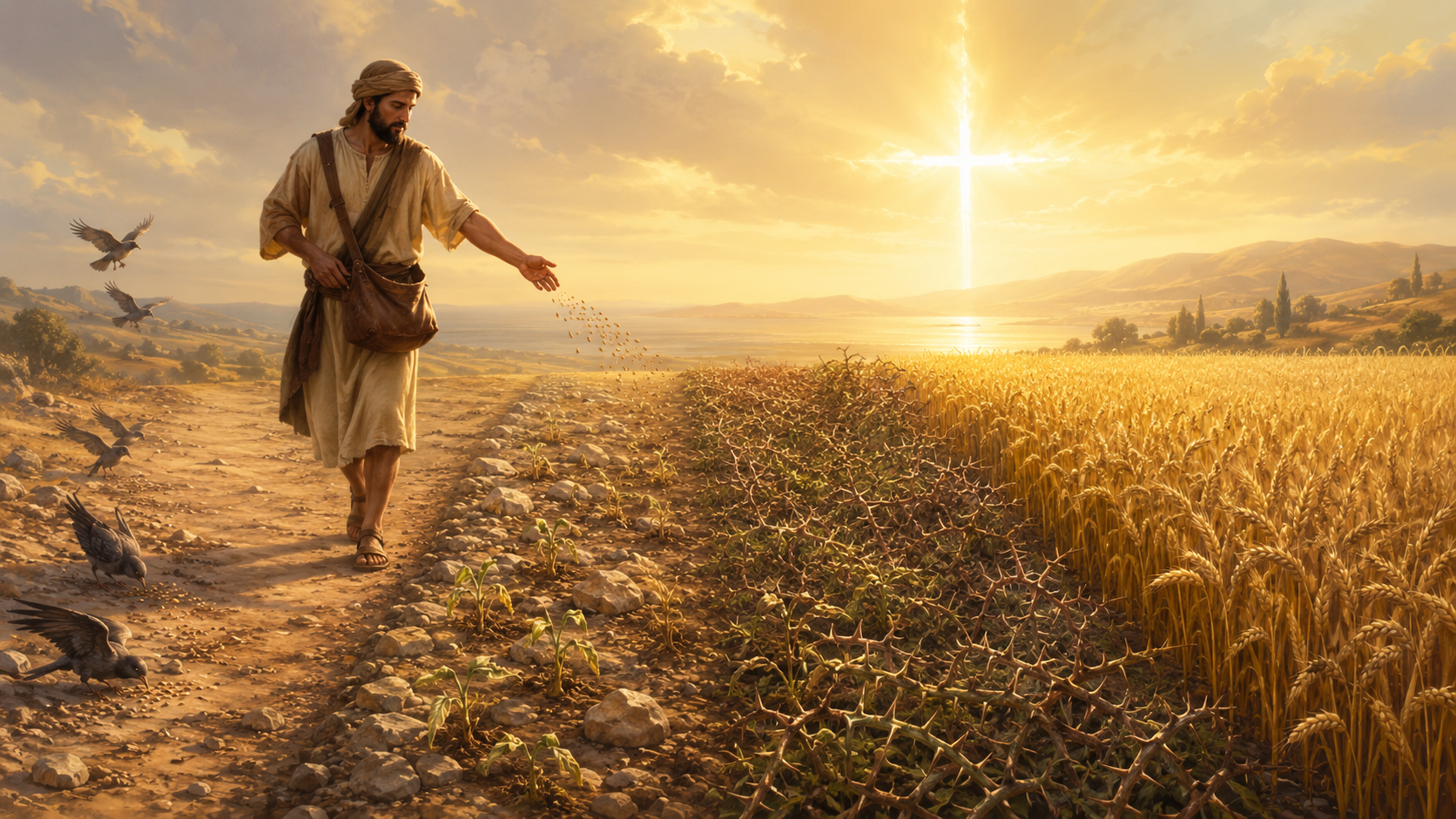
The Faithful Sower: What the Parable of the Soils Teaches Us About God's Word and Our Hearts God's Word is powerful enough to raise the dead, and yet people resist it every day. Jesus holds both of these truths together in one of His most well-known parables, and understanding them changes everything about how we see faith, struggle, and the grace of God. Does God's Word Always Work? The prophet Isaiah leaves no room for doubt. He describes rain falling on the earth, soaking into the ground, producing green growth, and eventually bread on the table. Then he says, "So shall my word be that goes out from my mouth; it shall not return to me empty, but it shall accomplish that which I purpose, and shall succeed in the thing for which I sent it." - Isaiah 55:11 English Standard Version (ESV) When God speaks, things happen. Light shines. The sea parts. The dead are raised. Sinners are forgiven. God's Word is living and powerful. And yet, Jesus tells a story where much of the seed seems to be lost. So which is it? Is God's Word unstoppable, or can people resist it? Jesus says both are true. What Is the Parable of the Sower Really About? A farmer walks through a field with a leather pouch of seed, reaching in and flinging it into the air. The seed lands in four different places. Some falls on a hard path and birds snatch it away. Some falls on rocky ground, sprouts quickly, but dies in the sun because there is no root. Some falls among thorns, which slowly choke the life out of the plant. And some falls on good soil and yields a harvest thirty, sixty, even a hundred times what was sown. Jesus explains the parable clearly. The seed is the Word of God. The field is the human heart. This story about farming is not really about farming at all. It is about us. What Do the Four Soils Represent in Our Lives? The Hard Path: When Distraction Steals the Word The seed that falls on the hard path is snatched away by birds. Jesus says the evil one comes and takes away what was sown. The devil does not need to convince anyone that the Bible is false. He only needs to keep us distracted. God's Word speaks on a Sunday. It convicts. It comforts. Then Monday comes, the phone rings, the news goes on, and by Tuesday the sermon is forgotten. Hardness of heart often looks less like rebellion and more like busyness. The Rocky Ground: When Faith Has No Roots The seed on rocky ground sprouts quickly and looks healthy at first. But when the sun comes out, the plant dies because the roots never went deep. Faith cannot live on emotion alone. It needs roots that go deep into God's promises. There are moments when following Jesus is exciting and energizing. But there are also moments when it costs something. Jesus never promised the Christian life would be easy. He promised He would always be with us. The Thorny Ground: When Good Things Crowd Out God The thorns are not obviously evil. They are the worries of this life, the deceitfulness of riches, and the pleasures of life. Bills, careers, sports, vacations, busy schedules. None of those things look like enemies on their own. But together, they slowly crowd Jesus out. Faith rarely disappears overnight. More often it gets crowded out. Prayer becomes less frequent. Worship becomes occasional. Scripture sits unopened. The thorns work quietly, almost unnoticed, but they choke the life out of faith. Which Soil Are You? It is tempting to look at these soils and think of someone else. But Jesus holds up a mirror. Where has your heart become hard? Where has your faith grown shallow? Where have the thorns begun to grow? If we are honest, we can find every one of those soils somewhere in our own hearts. Sometimes we have ignored God's Word. Sometimes we have doubted His promises. Sometimes we have loved other things more than we love Jesus. And here is the frightening part: we cannot fix our own hearts. A path cannot soften itself. A rock cannot make itself go deeper. Thorns never pull themselves out. Left to ourselves, our hearts remain exactly as they are. Who Is the Main Character in This Parable? If we are not careful, we treat this parable as mostly being about dirt. Four kinds of soil, four kinds of hearts. But the main character is not the soil. The main character is the sower. Watch him. He sees the hard path. He sees the rocks. He sees the thorns. And he keeps sowing. He does not skip the difficult ground. He does not save his seed only for the best soil. He keeps scattering his Word again and again. Every Sunday, every baptism, every absolution, every Lord's Supper, every Scripture reading, every conversation about Jesus. The sower never stops sowing. How the Cross Changes Everything in This Parable The greatest resistance to God's Word did not come from birds or rocks or thorns. It came from the world itself. Religious leaders rejected Jesus. The crowds cried out for His crucifixion. His own disciples ran away. It looked as though the sower had failed. But Jesus once said, "Truly, truly, I say to you, unless a grain of wheat falls into the earth and dies, it remains alone; but if it dies, it bears much fruit." - John 12:24 English Standard Version (ESV) The sower became the seed. He entered the ground. He died. And on the third day, He rose again. Now He bears a harvest no one can count. Remember the thorns that choked the plants? Later in Matthew's Gospel, that image appears again. Soldiers form a crown of thorns and place it on Jesus' head. In Genesis 3, thorns are a consequence of sin. He bore our sin. He bore our thorns, our hardness, our shallow faith, our divided hearts. He carried them all to the cross so that forgiveness, life, and salvation could grow in us. What Is the Real Miracle in This Parable? The miracle is not that some people finally become better soil. The miracle is that the Holy Spirit keeps working through the gospel. Hard hearts are broken open. Dead hearts come alive. Faith is created. Hope is born. Forgiveness is spoken. The gospel does what we cannot do for ourselves. It creates what it commands. That is why Isaiah can say God's Word will not return empty. His purposes are accomplished not because no one resists, but because God accomplishes what He desires through His Word. So do not spend your whole life looking at the soil. Look at the sower. He is still walking. He is still scattering seed. He is still speaking, forgiving, calling, and saving. Wherever His Word takes root, there is life, sixtyfold, a hundredfold. Life Application Maybe today your heart feels hard. Maybe your faith has grown shallow. Maybe the worries of life have wrapped themselves around your heart like thorns and are slowly choking out what once felt alive. Hear this good news: Jesus has not stopped sowing. He has come for you. His Word is still living, still powerful, still forgiving, still creating faith, and still bearing fruit. This week, identify one thorn in your life. One distraction, one worry, one pleasure that has been quietly crowding out time with God. Then take one concrete step to remove it. Open your Bible on a day you normally would not. Return to prayer even if it feels dry. Come to worship even when life feels busy. You cannot change your own soil, but you can place yourself where the sower is still sowing. Ask yourself these questions as you go through your week: Where in my life have I allowed distraction to steal God's Word before it takes root? Is my faith built on deep roots in God's promises, or is it dependent on feelings and circumstances? What thorns have been quietly growing in my heart, and am I willing to bring them to Jesus? Am I looking at the soil of my own heart, or am I looking to the faithful sower who never stops coming for me?
June 29, 2026 • 7 Minute Read
Divided by Love: What Jesus Really Meant When He Said He Came with a Sword
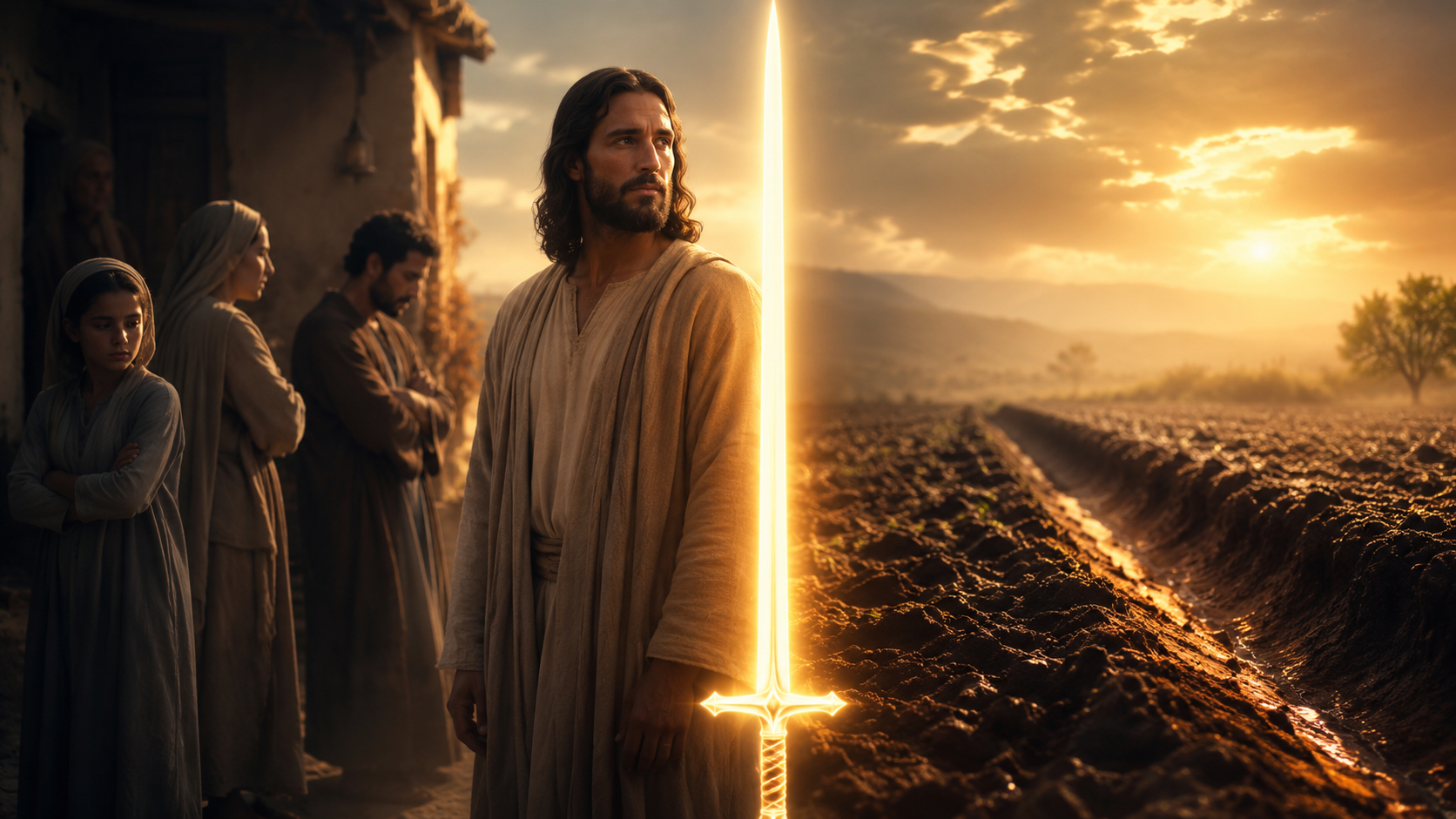
Divided by Love: What Jesus Really Meant When He Said He Came with a Sword Jesus said some of the most comforting words ever spoken. He also said some of the most challenging. In Matthew 10, He told His disciples plainly that He did not come to bring peace, but a sword. For anyone who knows Jesus as the Prince of Peace, that statement stops you cold. But when you understand what He meant, it changes how you think about faith, family, and where your deepest loyalty belongs. What Was Jesus Actually Preparing His Disciples For? Jesus was in the middle of preparing His twelve disciples to go out into the world as apostles. The word apostle comes from the Greek meaning "sent forth." These men had been learning from Jesus for nearly three years, and now He was getting ready to send them out to witness on His behalf. His instructions were not soft. He was honest with them about what was coming. People would reject them. Families would be divided. And the very relationships they treasured most could become sources of conflict because of their faith in Him. Why Did Jesus Say He Came with a Sword, Not Peace? This is the part that catches people off guard. Jesus said in Matthew 10: "Do not think that I have come to bring peace to the earth. I have not come to bring peace, but a sword." - Matthew 10:34 English Standard Version (ESV) He then went further, echoing the words of the Old Testament prophet Micah: "For I have come to set a man against his Father, and a daughter against her mother, and a daughter-in-law against her mother-in-law. And a person's enemies will be those of his own household." - Matthew 10:35-36 English Standard Version (ESV) These are hard words. But understanding the literary technique Matthew used here helps. It is called dialectical negation. Jesus was using strong, emphatic language to make a point. A better way to hear what He was saying might be this: "I have come not only to bring peace, but even more, a sword." Because wherever the gospel goes, people will be divided by their response to it. Did Jesus Really Come to Divide Families? Yes and no. Jesus absolutely came to bring peace. The angels announced it at His birth in Luke 2:14. He told His disciples earlier in Matthew 10:13 to let their peace rest on every home that welcomed them. He is the Prince of Peace. But He also knew that following Him would not be universally welcomed, even within families. The prophet Micah had already warned Israel that sin would cause division within households. Jesus was now saying something similar: faith in Him alone would cause the same kind of division. Not because He wanted conflict, but because the gospel demands a response, and not everyone responds the same way. What Does "Rightly Ordered Love" Mean for Christians? Throughout this portion of His missionary discourse, Jesus was calling His disciples to have what might be called rightly ordered love. Just as He called them to have rightly ordered fear (fearing God above what man can do to them), He was now calling them to love God above everything else, including family. That is a difficult thing to hear. We love our parents. We love our children. We love our spouses. These are good and God-given relationships. But Jesus was clear that none of those relationships should come before our love and trust in Him. He was not asking His disciples to abandon their families. He was asking them to make sure their deepest loyalty, their ultimate trust, belonged to God alone. How Does This Apply to Witnessing and Sharing Your Faith? One of the reasons this message matters so much today is that many Christians are afraid to share their faith. Research from Barna shows that 64% of Christians believe they have a responsibility to share their faith, down from 89% just 25 years ago. Even more striking, 70% of unchurched Americans say that a Christian friend has never once shared their faith with them. Fear holds us back. Fear of rejection. Fear of saying the wrong thing. Fear of damaging a relationship. But Jesus addressed that fear directly. He reminded His disciples that God knows when a sparrow falls to the ground. He knows the number of hairs on your head. If God cares about those small things, He will certainly care for you when you step out in faith to share the gospel. "Are not two sparrows sold for a penny? And not one of them will fall to the ground apart from your Father. But even the hairs of your head are all numbered. Fear not, therefore; you are of more value than many sparrows." - Matthew 10:29-31 English Standard Version (ESV) What Is the Reward for Those Who Follow Christ Above All Else? Jesus did not leave His disciples without hope in this hard message. He promised that those who receive His missionaries, even in something as small as giving one of them a cup of water, would receive the same reward as the missionary. Faith expressed in even small acts of care for those sharing the gospel carries eternal weight. Baptism into the name of the triune God is where the Holy Spirit plants the mind of Christ within us. From that foundation, we are called to live out our faith in the world, even when it costs us something. The Image of the Plow: Opening the Heart for the Gospel There is a powerful image behind Jesus' words here. When He comes with a sword, He is not coming to destroy. He is coming like a plow that cuts open the ground so that seed can be planted. He opens a furrow in the heart so that the seed of His redemption can take root. His words to His disciples were not meant to discourage them. They were meant to prepare them. He was honest about the difficulty ahead so that when conflict came, they would not be surprised. They would know that the division was not a sign that something had gone wrong. It was a sign that the gospel was doing exactly what it was meant to do. Two Camps: Where Does Your Love Belong? Jesus made clear that His coming would create two groups of people. Those who put their love and trust in Him above all earthly relationships and possessions. And those who love the world, their comfort, their family approval, or their earthly security more than they love God. This is not a call to be harsh or cold toward family. It is a call to make sure that when push comes to shove, when faith costs something, our love for Christ holds firm. Life Application This week, consider where your deepest loyalty actually lives. It is easy to say we love God above all things. It is harder to live that way when faith creates friction in a relationship or costs us something we value. The challenge this week is simple but not easy: identify one relationship or situation where fear has kept you from living out or sharing your faith, and take one small step toward courage. It does not have to be a grand gesture. It might be a conversation, a text, an invitation, or simply being honest about what you believe when the moment comes. Ask yourself: Is my love for God truly ordered above my love for the approval of others, including family? Is there someone in my life who has never heard me share what Christ means to me? What specific fear is keeping me from witnessing, and have I brought that fear honestly before God? When conflict arises because of my faith, do I see it as a failure or as the gospel doing its work? Jesus did not promise His followers an easy road. He promised to be with them on it. That is enough to take the next step.
June 14, 2026 • 5 Minute Read
You Are the Priesthood: Understanding Your Role as a Christian Priest
Have you ever wondered what it truly means to be a Christian? Beyond attending church services and reading your Bible, there's a profound truth that many believers don't fully grasp: you are actually a priest. This isn't just a metaphor or spiritual concept—it's a biblical reality that should transform how you live out your faith. What Does It Mean to Be Part of the Priesthood of All Believers? The foundation for understanding our role as priests comes from both the Old and New Testaments. In Exodus 19:6, God told the Israelites, "you shall be to me a kingdom of priests and a holy nation" - Exodus 19:6 English Standard Version (ESV). This was part of the old covenant, where Israel was expected to keep God's commandments and serve as His holy people. The Apostle Peter later connected this Old Testament promise to New Testament believers, writing: "But you are a chosen race, a royal priesthood, a holy nation, a people for his own possession, that you may proclaim the excellencies of him who called you out of darkness into his marvelous light" - 1 Peter 2:9 English Standard Version (ESV). How Did Martin Luther Understand the Priesthood of All Believers? Martin Luther revolutionized Christian understanding when he wrote about the priesthood of all believers in 1520. He identified three "Roman walls" that needed to come down in the Catholic Church of his time: The Wall of Jurisdiction Luther challenged the idea that only the Pope could interpret Scripture. He argued that all believers, through the Holy Spirit, can receive interpretive insight from God's Word. While we should respect theologians and church tradition, no single person has exclusive authority over biblical interpretation. The Wall of Merit This wall represented the false teaching that salvation comes through works and indulgences. Luther firmly established that we are saved by grace through faith in Christ alone, not through any merit-based system of earning God's favor. The Wall of Mediation Perhaps most importantly for understanding our priesthood, Luther rejected the idea that only ordained priests could mediate between God and people. In the New Testament, Christ became our High Priest, and through baptism, all believers inherit the responsibility and privilege of serving as priests. What Does Christ's Compassion Teach Us About Witnessing? In Matthew 9, we see Jesus looking at the crowds with deep compassion. The text tells us: "When he saw the crowds, he had compassion for them, because they were harassed and helpless, like sheep without a shepherd" - Matthew 9:36 English Standard Version (ESV). This compassion should infuse our witnessing for Christ. Even when people appear to be acting out in anger or seem difficult to approach, we must look deeper. Often beneath challenging behavior lies someone who is truly helpless, harassed, and hurting. How Are We Called to Be Laborers in the Harvest? Jesus told His disciples to pray for laborers to be sent into the harvest field. But immediately after asking them to pray for workers, He commissioned them to become those very workers. This same pattern applies to us today—we pray for witnesses and evangelists, but we must also recognize that we are called to be those witnesses ourselves. The disciples became apostles (meaning "sent ones") when Jesus empowered and commissioned them. Similarly, through our baptism and faith, we are empowered and sent out as priests to serve others and share the Gospel. What Are the Three Essential Elements of Christian Priesthood? According to Luther, three things make someone a priest: Faith - Believing in Jesus Christ as Lord and Savior Proclaiming the Gospel - Sharing the good news with others Being baptized by the Holy Spirit - Being joined to Christ's death and resurrection Through baptism, we are joined to Christ's death (our old self dies) and His resurrection (we receive new life). This transformation makes us like Christ and calls us to mimic His ministry of compassion and service. How Do We Mimic Our Master Jesus? Just as an impersonator studies and mimics their subject, we are called to study and mimic Jesus Christ, our Master. We are shaped by His ministry, His focus on compassion, and His ability to see beyond people's exterior circumstances to their deeper needs. Our faith should be centered on the truth that Jesus is Lord, the King of all creation, and the one to whom we are accountable. As priests in His name, we carry the responsibility to witness for Christ in our daily vocations and interactions. Life Application This week, embrace your identity as a priest in God's kingdom. Look for opportunities to exercise your priestly calling by showing Christ-like compassion to those around you. When you encounter someone who seems difficult or is acting out, try to see beyond their behavior to the hurt or helplessness underneath. Consider these questions as you live out your priestly calling: How can I show Christ's compassion to someone who seems "harassed and helpless" this week? What opportunities do I have in my daily vocation to witness for Christ through my words and actions? Am I relying too heavily on pastors and church leaders to do the work of ministry, or am I embracing my role as part of the priesthood of all believers? How can I better "mimic the Master" Jesus in my interactions with others? Remember, you don't need special training or ordination to serve as a priest—through your baptism and faith, you already have everything you need to be a witness for Christ and a mediator of His grace to others.
June 7, 2026 • 6 Minute Read
The Unexpected Call of Matthew: When Jesus Chooses the Unlikely
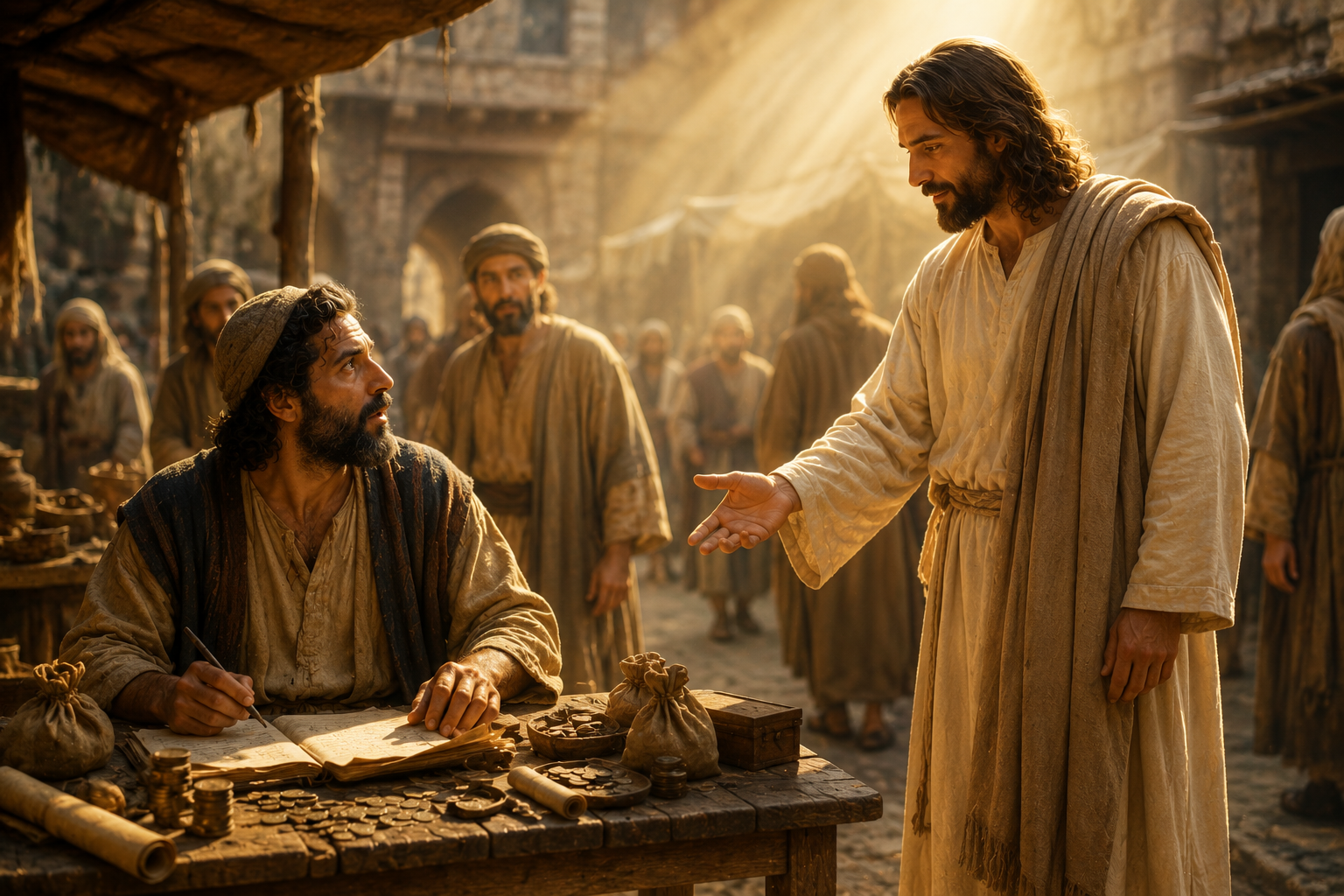
The story of Matthew's calling reveals something profound about how God works in our lives. Unlike many biblical figures who actively sought Jesus, Matthew was simply doing his job when Christ walked by and changed everything with two simple words: "follow me." Who Was Matthew Before Jesus Called Him? Matthew, also known as Levi, was a tax collector in the bustling port city of Capernaum. As the son of Alphaeus, he had chosen a career path that brought him wealth and Roman favor, but at a tremendous social cost. Tax collectors were considered traitors by their fellow Jews because they collaborated with the occupying Roman forces. Picture Matthew sitting behind protective bars - a necessary precaution given how despised tax collectors were. He collected tolls on goods passing through Capernaum's port, likely taking a cut for Rome and probably something extra for himself. While this brought financial prosperity and status within Roman circles, it made him a social pariah among his own people. What Made Matthew's Calling Different? An Unrequested Encounter Unlike Zacchaeus who climbed a tree to see Jesus, or the woman with the bleeding disorder who sought healing by touching Christ's garment, or Nicodemus who came seeking answers at night, Matthew wasn't looking for Jesus at all. He was simply conducting business when Jesus walked by his tax booth. The Power of Two Words "'Follow me'" - Matthew 9:9 (ESV). These two words carried such divine authority that Matthew immediately left his lucrative career behind. There was no negotiation, no request for time to think it over. The call of Christ demanded an immediate response, and Matthew gave it. What Does It Mean to Be a Theologian of the Cross? Martin Luther distinguished between two types of theologians in his famous Heidelberg Disputation of 1518. Understanding this distinction helps us grasp the significance of Matthew's response. Theologians of Glory vs. Theologians of the Cross A theologian of glory relies on their own works and wisdom, seeking righteousness through their own efforts. They prefer doing good works to suffering and value their own strength over recognizing their weakness before God. A theologian of the cross, however, embraces the truth that we are saved by grace through faith alone. They understand that following Christ requires dying to self - giving up what we want in life to follow what Christ wants for us. When Matthew left his tax booth, he became a theologian of the cross. He died to his old life of wealth and prestige to live a new life with Christ. How Did Jesus Respond to Religious Criticism? Dining with Sinners After Matthew's calling, Jesus reclined at table with tax collectors and sinners. The Pharisees were appalled, questioning why Jesus would associate with such people rather than the "righteous." Christ's Powerful Response Jesus answered with profound wisdom: "'Those who are well have no need of a physician, but those who are sick. Go and learn what this means: 'I desire mercy, and not sacrifice.' For I came not to call the righteous, but sinners'" - Matthew 9:12-13 (ESV). This statement revealed the false righteousness of the Pharisees. They believed their sacrifices and religious observances made them right with God, but their hearts remained far from Him. Jesus came for those who recognized their need for a physician - their need for salvation. What Is the Difference Between Mercy and Grace? Understanding Mercy Mercy means not getting what you deserve. We deserve eternal punishment for our sins, but God's mercy withholds that judgment. Understanding Grace Grace means getting what you don't deserve. We don't deserve eternal life, but God's grace gives it to us freely through Christ's sacrifice on the cross. As Paul wrote: "'for all have sinned and fall short of the glory of God, and are justified by his grace as a gift, through the redemption that is in Christ Jesus'" - Romans 3:23-24 (ESV). What Was the Unimaginable Outcome of Matthew's Calling? God transformed this social outcast into something extraordinary: A Disciple: Matthew spent three years learning directly from Jesus An Apostle: He was sent forth with power to heal the sick and raise the dead An Evangelist: He wrote the Gospel of Matthew, preserving Christ's teachings for all generations The same man who once collected taxes for Rome became the author of the Gospel that begins with Christ's genealogy, establishing Jesus as the promised Messiah. Under the inspiration of the Holy Spirit, Matthew would later write the very words Jesus spoke: "'If anyone would come after me, let him deny himself and take up his cross and follow me'" - Matthew 16:24 (ESV). Life Application Matthew's story challenges us to examine our own response to Christ's call. Like Matthew, we may not have been actively seeking Jesus when He first called us through the Holy Spirit. Yet His call demands the same response - a willingness to die to self and follow Him. This week, consider what "tax booth" you might need to leave behind. What career ambitions, financial security, social status, or personal desires are you clinging to that might be preventing you from fully following Christ? Remember that following Jesus as a theologian of the cross means embracing dependence on God rather than relying on our own strength and wisdom. Ask yourself these questions: Am I living as a theologian of glory (relying on my own works and wisdom) or as a theologian of the cross (depending on God's grace and mercy)? What would I need to "leave behind" to follow Christ more fully? How can I show mercy to others the way Christ has shown mercy to me? In what areas of my life am I still trying to earn God's favor through my own efforts rather than resting in His grace? Matthew's transformation from despised tax collector to beloved evangelist reminds us that no one is beyond God's reach. His unrequested encounter with Christ led to an unimaginable outcome - and the same can be true for us when we respond to His call with faith and obedience.

June 1, 2026 • 13 Minute Read
Work of the Spirit
As we know, all scripture is given by the inspiration of the Holy Spirit, the divine agent who led the authors of our biblical texts to write God-breathed words (2 Peter 1:21, 2 Tim 3:16-17). When New Testament writers describe the work of the Holy Spirit, we are given many accounts of the apostles and their associates proclaiming and teaching Jesus Christ in the Spirit, or in more familiar language by the power of the Spirit.[1] It is preaching Christ crucified and risen for you. In the language of Gerhard O. Forde – proclamation of the gospel is doing the Holy Spirit to hearers,[2] whereby the living voice of the gospel, as conveyed through the Word of God (Scripture) and Sacraments (Confession/Absolution, Baptism, Lord’s Supper), becomes the means by which the Holy Spirt implants faith and develops us as disciples in and for Christ (the process we call sanctification). Christ’s death atoned for humankind’s sin, and His resurrection conquered the power of Satan and death over us, making us heirs to eternal life. In our doctrine we refer to this main essential teaching of the Lutheran Faith as our “material principle,”[3] namely that we are justified in the sight of God and placed in a right relationship with God by grace through faith in Christ alone for the forgiveness of our sins – and where there is forgiveness of sins, there is a new life in Christ and eternal salvation. One of the common misconceptions about the Holy Spirit is that we can think of Him or treat Him as a free agent, independently of the Son and the Father. It is of course possible to think and speak about the Holy Spirit per se and even make room for a doctrinal place for the one who has been called at times the forgotten or half-known person of the Trinity. More fundamentally, the Spirit is the one in and by whom the church proclaims and teaches the Son as our righteousness before the Father. [4] The Spirit is the one in whom the church lives and worships the Father through the intercession of the Son. In simpler language, scriptural exegete Edward Schweizer once said: “Long before the Spirit was a theme of doctrine, He was a fact in the experience of the community.”[5] The point is the same. If the church can talk at all about the Holy Spirit, it is only because this Spirit has had His way with the church in the first place, only because the church already proclaims, teaches, lives, and worships in the Spirit of the Father and the Son. The Holy Spirit has His unique way of doing business, of having His way with us and bringing us into His holy presence and activity. For some Christians, the Holy Spirit is not always top of mind, and we may make Him what J. I. Packer once called the Cinderella of Christian theology who was left behind and never made it to the ball with the other two persons. Having said that, we must also recognize that the Spirit Himself typically chooses to become self-effacing in comparison to, and in His relationship with, the Son and the Father and us. In other words, the Holy Spirit assumes a sort of modest, behind-the-scenes identity, in that He does not ordinarily draw great attention to Himself but prefers pointing people to another one for life and salvation, namely, tile Son of God. Similarly, when it comes to holiness, sanctification, vocation, or the Christian life, the Holy Spirit does not point us to ourselves, does not draw great attention to His presence in us, but rather points us to our neighbor, whom God has placed in our midst.[6] Avoiding “Spirit Only” and “Spirit Void” Heresies A trinitarian approach to the person and work of the Holy Spirit that respects the centrality of Jesus Christ in the history of salvation, and the self-effacement of the Spirit in leading us to the Son and through Him to the Father as well as to the neighbor, will avoid the dangers of “Spirit only” and Spirit void” spiritualities that often lead respectively to what can be referred to as emotionalism and rationalism, or an extreme focus on the work and gifts of the Holy Spirit that we see in some charismatic church movements. It is not a problem within the Lutheran Church Missouri Synod but something we should be aware of. Take Christ and the Father away from the Holy Spirit and you end up with humanly designed forms of spirituality that are neither law nor gospel. A move toward ‘a “Spirit only” theology will most certainly yield forms of spirituality that are neither commanded by God the Father nor centered in Christ’s gospel and sacraments. Luther and the Lutheran confessors in the Book of Concord are critical of what they called “enthusiasm,” which is seeking God’s Spirit or having a spiritual life apart from or without reference to God’s own Word – this can be called God-within-ism. "Enthusiasm" (from the Greek enthousiasmos) refers to the theological error of expecting the Holy Spirit's guidance, personal revelation, or conversion directly from God without the use of the external, written Word and Sacraments. The Formula of Concord explicitly defines enthusiasts as "those who expect the heavenly illumination of the Spirit... without the preaching of God’s Word". In the Smalcald Articles, Martin Luther warns against those who boast that they have the Spirit without and before the Word". These individuals judge, alter, or ignore Scripture based on their own "spirit" or personal feelings. The Book of Concord maintains that God works exclusively through and with the outward Word (the preached Gospel and the Sacraments), rejecting the idea that God grants grace through inward, private feelings or mystical experiences alone.[7] The Apostle Paul dealt with this inward focused “enthusiasm” in his church in Corinth, Greece when he expressed concern regarding the abuse of the Holy Spirit’s spiritual gifts to them. The Corinthians were using them for selfish display, personal status, and chaotic worship rather than building up the church community. Instead of banning the gifts altogether, Paul dedicated three full chapters—1 Corinthians 12, 13, and 14—to correcting these abuses by establishing that all spiritual expressions must be grounded in love, order, and mutual edification. The city of Corinth was a heavily pluralistic and pagan environment. Many believers also brought their old cultural habits into the newly formed Christian church. Pagan Syncretism: Prior to converting, many Corinthians participated in mystery cults where religious ecstasy, frantic spiritual frenzies, and uncontrolled, ecstatic speech were seen as signs of divine possession. The Hallmark of Godliness: Believers began treating the gift of speaking in tongues as the ultimate status symbol of supreme spirituality. Chaotic Worship: Church gatherings descended into a competitive, rowdy atmosphere where multiple people shouted out uninterpreted tongues simultaneously to show off, rendering the service unintelligible to regular attendees and visitors. To avoid the “Spirit only” move, the Holy Spirit and the Son must be seen as inseparable companions. working together in a joint mission to bring sinners into communion with God the Father and then also into conformity with the Father’s will. Saint Basil the Great (330–379 AD), Bishop of Caesarea, was a towering Church Father and theologian of the early Christian era. He is celebrated for his work in the language of the third article of the Nicene Creed and formulating orthodox Trinitarian doctrine. Basil argued that the Holy Spirit is not just at work only after Christ’s death and resurrection but already in and through Christ’s own life and mission. It is because the Holy Spirit is united inseparably to Christ in His incarnation that Christ also could be said to be united inseparably to the Spirit after His death and resurrection. Referring to God’s gracious plans to save humankind in Jesus Christ, Basil asks rhetorically, Who will deny that it was all made possible through the grace of the Spirit? Everything that happened since the Lord’s Corning in the flesh, it all comes to pass through the Spirit. In the first place, the Lord was anointed with the Holy Spirit at His baptism, who would henceforth he inseparably united to His very flesh (here Basil cites parts of texts on the baptism. namely, Jn 1:33, Mt 3:17. and Acts 10:38). After His baptism. the Holy Spirit was present in every action that Christ performed. He was there when the Lord was tempted by the devil (citing Mt 12:28). The Spirit was united with Jesus when He performed miracles (citing Mt 12:28). Nor did the Spirit leave’ Him after His resurrection from the dead (citing Jn 20:22-23). For Basil, there is a joint mission of the Son and Spirit in the Father’s plan of salvation. The Joint Mission of the Son and the Spirit John 1:33-34 conveys from the vantage point of the New Testament prophet John the Baptist hat the privileged place of the Holy Spirit is Jesus - Christ bears the Spirit (Spirit Christology) and gives the Spirit to the Church in a life of faith – (Christological Pneumatology). Let me unpack this below without a further direct reference to the theological terminology. Basil makes a profound statement when he speaks of the Spirit as being “inseparably united to the Lord in His very flesh.” [8] From the very first moment of the Son human life, the Holy Spirit appears in the story of salvation. The Gospels attribute the conception and holiness of the Virgin’s child to the Holy Spirit (Mt 1:18-20; Lk 1:35). At the Jordan Jesus is anointed with the Spirit as the Suffering Servant that the prophet Isaiah spoke of (Is.42,49,50,52-53), the rejected one who takes upon Himself our sins. As the Servant, Jesus gives His life as a ransom for many (Mk 10:45). Jesus describes His suffering unto death as a baptism (Mark 10:38—39: Lk 12:50). His baptism in water at the Jordan leads to His baptism in blood at Golgotha. Through the eternal Spirit Jesus offers His sinless life to the Father on the cross to cleanse us from our sins and render us fit to worship God (Heb 9:14). But the Suffering Servant is also highly exalted. The Father establishes Jesus as Son of God in power according to the Spirit of holiness by raising Him from the dead (Rom 1:4)-. In the Spirit, the Son dies and is raised to new life. There is of course a distinct difference between Christ and the Spirit-led prophets. The Old Testament prophets and John the Baptist of the New Testament pointed to the Christ who was to come (1 Pt 1:10—11), but the words of Christ point to Himself. As St. John puts it, the incarnate Son speaks Spirit-breathed words that lead to faith and eternal life in Him because God the Father has given Him the Spirit without measure (Jn 3:34; 6:40, 63-69). One can see an unbreakable link in the Scriptures between Christ’s bearing and giving of the Spirit. The Gospel writers are of one accord in teaching that the Son on whom the Spirit descends and remains is the One who baptizes with the Spirit (Jn 1:3 3; Lk 3:16; Mt 3:11; Mk 1:8). Indeed, the incarnate Son bears the Holy Spirit for Himself from conception. But that indwelling of the Holy Spirit from conception is unique to Christ. From the days of Adam, we are born in sin and without the Holy Spirit. How then are we to receive the Spirit whom Christ bears? Our conversion occurs through hearing the proclamation of the gospel and in Baptism and the additional means of grace in confession/absolution and Holy Communion reinforce our forgiveness of sins in Christ. After Christ’s coming in the flesh, His anointing unto death becomes a condition in the Father’s plan of salvation for the universal giving’ of the Spirit on Pentecost. In other words, Jesus is anointed with the Spirit in His baptism so that we too might receive upon completion of His redemptive mission, His Spirit or anointing in our baptism. For Luke, from Pentecost onwards every baptism in the name of the Father, Son, and Holy Spirit becomes a “little Pentecost,” a means of grace through which the exalted Jesus forgives our sins and sends the gift of the Spirit from the Father to dwell in us (Acts 2:3,8-39). This leads to us bearing the fruit of the Spirit in our interactions with our neighbor. I believe in the Holy Spirit, the holy Christian church, the communion of saints, the forgiveness of sins, the resurrection of the body, and the life everlasting. Amen.[9] What does this mean? I believe that I cannot by my own reason or strength believe in Jesus Christ, my Lord, or come to Him; but the Holy Spirit has called me by the Gospel, enlightened me with His gifts, sanctified and kept me in the true faith. In the same way He calls, gathers, enlightens, and sanctifies the whole Christian church on earth, and keeps it with Jesus Christ in the one true faith. In this Christian church He daily and richly forgives all my sins and the sins of all believers. On the Last Day He will raise me and all the dead and give eternal life to me and all believers in Christ. This is most certainly true. This Pentecost season, we pray Come Holy Spirit and manifest your power, fill us with your gifts and fruit, and guide us to be more like Christ day by day. [1] Leopoldo A. Sanchez M., Pneumatology: Key to Understanding the Trinity, Congress on the Lutheran Confessions, 2009. [2] Gerhard 0. Forde, Theology is for Proclamation (Minneapolis: Fortress, 1990). [3] Stephen P. Mueller, Called to Believe, Teach, and Confess – An Introduction to Doctrinal Theology, Vol 3 (Wipf & Stock Publishers, Eugene, Oregon, 2005). [4] Leopoldo A. Sanchez M., Pneumatology: Key to Understanding the Trinity, Congress on the Lutheran Confessions, 2009. [5] See Eduard Schweizer’s discussion of Greek πνεῦμα (pneúma), which can mean “spirit,” and πνευματικός (pneumatikós) meaning “pertaining to the spirit” in Gerhard Kittel and G. Friedrich, eds, Theological Dictionary of the New Testament, vol 6 (Grand Rapids, MI: Wm. B. Eerdmans. 1964), 396. [6] Leopoldo A. Sanchez M., Pneumatology: Key to Understanding the Trinity, Congress on the Lutheran Confessions, 2009. [7] Robert Kolb, Timothy J. Wengert, and Charles P. Arand, The Book of Concord: The Confessions of the Evangelical Lutheran Church (Minneapolis, MN: Fortress Press, 2000). [8] ’ St. Basil the Great. On the Holy Spirit (Crestwood. NY: St. Vladimir’s Seminary Press, 1QQ7’. 65 (1 6.3). Emphasis added. [9] Luther, Luther’s Small Catechism with Explanation (St. Louis, MO: Concordia Publishing House, 2017), 222.