The Witness of Stephen: Following Christ Even in Opposition

Mr. Dan Burk • Principal
May 7, 2026

6 Minute Read

Stephen's story from Acts 6-7 offers a powerful example of faithful witness in the face of persecution. His martyrdom wasn't just an ending—it was the culmination of a life dedicated to serving others and boldly proclaiming the truth about Jesus Christ.

How Did Stephen Begin His Ministry?

Stephen didn't start as a preacher or theologian. He was chosen for a practical need: serving widows in the early church. The twelve apostles were overwhelmed with the growing congregation's needs, particularly food distribution to widows in their community. They appointed seven men, including Stephen, to handle this vital service.

But God had bigger plans. Through Stephen's faithful service in this seemingly simple role, God worked "great signs and wonders among the people." This demonstrates how God uses our everyday vocations—whether serving meals, teaching children, or working in an office—to accomplish His purposes.

What Made Stephen's Defense So Powerful?

When Stephen was brought before the Sanhedrin (the Jewish Supreme Court), he faced the same false accusations that Jesus had encountered. They accused him of blasphemy and speaking against Moses and the prophets. But Stephen, filled with the Holy Spirit, delivered a masterful defense that his opponents couldn't refute.

Stephen's Historical Journey Through Scripture

Stephen's sermon took his accusers on a journey through Jewish history, showing a consistent pattern:

Abraham's Call: He reminded them that their father Abraham was originally a pagan from Ur of the Chaldeans (modern-day Iraq). God called him out of paganism to follow Him, making Abraham a sojourner who trusted God's promises without seeing their fulfillment.

Joseph's Story: Stephen recounted how Joseph's brothers, driven by jealousy, sold him into slavery. Yet God was with Joseph, elevating him to second-in-command in Egypt. When famine struck, Joseph's brothers came seeking help, and Joseph forgave them—foreshadowing the forgiveness Christ offers.

Moses the Deliverer: Stephen described how God raised up Moses to deliver His people from Egyptian bondage. Yet even after witnessing miraculous signs and wonders, the Israelites rejected Moses and created a golden calf while he received the law on Mount Sinai.

The Pattern of Rejection

Through this historical narrative, Stephen revealed a troubling pattern: God repeatedly delivered His people, yet they consistently rejected Him and His messengers. The prophets who called them to repentance were persecuted. The kings who tried to lead them back to God were opposed.

Why Did Stephen's Message Provoke Such Anger?

Stephen concluded his defense with a direct challenge: "You stiff-necked people, uncircumcised in heart and ears, you always resist the Holy Spirit, as your fathers did, so do you. Which of the prophets did your fathers not persecute? And they killed those who announced beforehand the coming of the Righteous One, whom you have now betrayed and murdered."

This wasn't just a history lesson—it was an indictment. Stephen was telling them they were following the same pattern of rejection that had characterized their ancestors. They had rejected the ultimate Prophet, the Messiah Himself.

How Did Stephen Face Death?

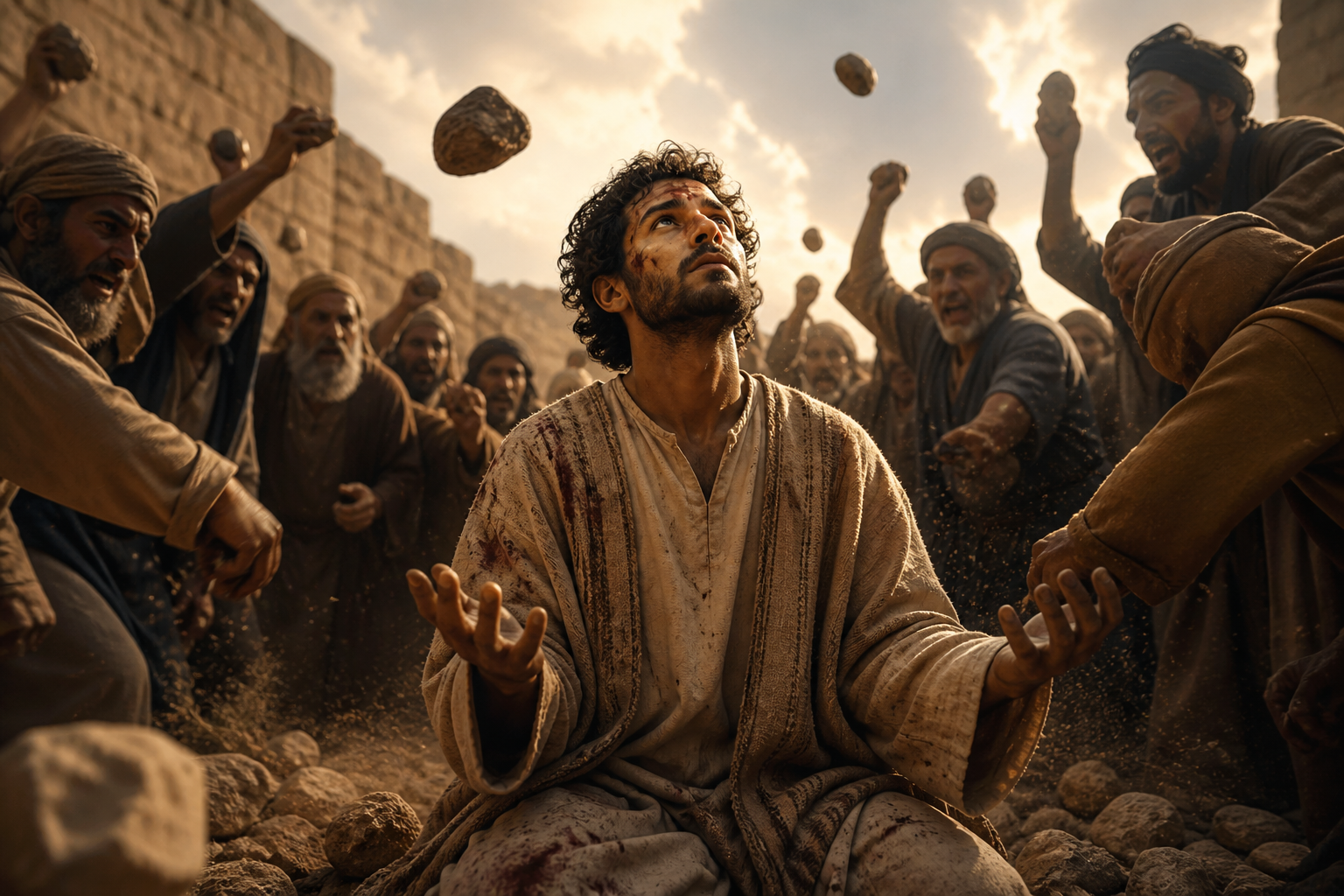
The crowd's response was immediate and violent. They ground their teeth in rage and began stoning Stephen. But in his final moments, something remarkable happened.

Stephen looked up and saw a vision of Christ standing at the right hand of God. This vision of the risen, glorified Christ gave him strength to face death with grace. Most significantly, as the stones struck him, Stephen prayed, "Lord, do not hold this sin against them."

This prayer echoes Jesus' words from the cross: "Father, forgive them, for they know not what they do" (Luke 23:34 ESV). Even in his agony, Stephen demonstrated the transforming power of Christ's love.

What Can We Learn About Witnessing for Christ?

Stephen's example teaches us several crucial lessons about Christian witness:

Faithfulness in Small Things: Stephen started by serving widows. God used his faithfulness in this practical ministry to prepare him for greater service.

The Power of the Holy Spirit: When confronted by learned opponents, Stephen didn't rely on his own wisdom. The Holy Spirit gave him words that confounded his accusers.

Courage in Opposition: Stephen didn't soften his message when facing a hostile audience. He spoke truth even when it cost him his life.

Forgiveness for Enemies: Perhaps most challenging of all, Stephen prayed for those who were killing him. This supernatural response could only come from someone filled with Christ's love.

Who Was Watching Stephen's Martyrdom?

Among the crowd that day was a young man named Saul, holding the garments of those who stoned Stephen. This same Saul would later encounter the risen Christ on the road to Damascus and become the apostle Paul. Stephen's faithful witness, even unto death, planted seeds that would bear fruit in one of Christianity's greatest missionaries.

What Does This Mean for Modern Christians?

Stephen's story isn't just ancient history—it's a call to faithful witness in our own time. We may not face literal stoning, but we will encounter opposition when we stand for Christ's truth. The question is: will we respond with Stephen's courage and grace?

Christ calls us to be witnesses in every role we fill—as parents, employees, neighbors, and church members. We don't need to deliver eloquent sermons like Stephen, but we can share the simple truth: "Christ died for me and everything I had done wrong, and He will do the same for you."

Life Application

This week, ask yourself: Am I faithfully serving Christ in the "small" roles He's given me? Stephen's ministry began with serving widows, but God used that faithfulness to prepare him for greater witness. Whether you're changing diapers, working at a desk, or teaching a class, God can use your faithful service as a platform for witness.


Consider these questions as you reflect on Stephen's example:

When faced with opposition to my faith, do I respond with grace or defensiveness?

Am I prepared to share the simple truth of what Christ has done for me?

Can I pray for those who oppose or mistreat me, as Stephen did for his executioners?

How is God calling me to be a witness in my current circumstances, even if they seem ordinary?

Stephen's witness reminds us that following Christ may be costly, but it's always worth it. The risen Christ who gave Stephen strength to face martyrdom is the same Christ who empowers us to live faithfully today.

Up Next
From this Collection: Quick Reads, Deep Insights
June 14, 2026 • 5 Minute Read
You Are the Priesthood: Understanding Your Role as a Christian Priest
Have you ever wondered what it truly means to be a Christian? Beyond attending church services and reading your Bible, there's a profound truth that many believers don't fully grasp: you are actually a priest. This isn't just a metaphor or spiritual concept—it's a biblical reality that should transform how you live out your faith. What Does It Mean to Be Part of the Priesthood of All Believers? The foundation for understanding our role as priests comes from both the Old and New Testaments. In Exodus 19:6, God told the Israelites, "you shall be to me a kingdom of priests and a holy nation" - Exodus 19:6 English Standard Version (ESV). This was part of the old covenant, where Israel was expected to keep God's commandments and serve as His holy people. The Apostle Peter later connected this Old Testament promise to New Testament believers, writing: "But you are a chosen race, a royal priesthood, a holy nation, a people for his own possession, that you may proclaim the excellencies of him who called you out of darkness into his marvelous light" - 1 Peter 2:9 English Standard Version (ESV). How Did Martin Luther Understand the Priesthood of All Believers? Martin Luther revolutionized Christian understanding when he wrote about the priesthood of all believers in 1520. He identified three "Roman walls" that needed to come down in the Catholic Church of his time: The Wall of Jurisdiction Luther challenged the idea that only the Pope could interpret Scripture. He argued that all believers, through the Holy Spirit, can receive interpretive insight from God's Word. While we should respect theologians and church tradition, no single person has exclusive authority over biblical interpretation. The Wall of Merit This wall represented the false teaching that salvation comes through works and indulgences. Luther firmly established that we are saved by grace through faith in Christ alone, not through any merit-based system of earning God's favor. The Wall of Mediation Perhaps most importantly for understanding our priesthood, Luther rejected the idea that only ordained priests could mediate between God and people. In the New Testament, Christ became our High Priest, and through baptism, all believers inherit the responsibility and privilege of serving as priests. What Does Christ's Compassion Teach Us About Witnessing? In Matthew 9, we see Jesus looking at the crowds with deep compassion. The text tells us: "When he saw the crowds, he had compassion for them, because they were harassed and helpless, like sheep without a shepherd" - Matthew 9:36 English Standard Version (ESV). This compassion should infuse our witnessing for Christ. Even when people appear to be acting out in anger or seem difficult to approach, we must look deeper. Often beneath challenging behavior lies someone who is truly helpless, harassed, and hurting. How Are We Called to Be Laborers in the Harvest? Jesus told His disciples to pray for laborers to be sent into the harvest field. But immediately after asking them to pray for workers, He commissioned them to become those very workers. This same pattern applies to us today—we pray for witnesses and evangelists, but we must also recognize that we are called to be those witnesses ourselves. The disciples became apostles (meaning "sent ones") when Jesus empowered and commissioned them. Similarly, through our baptism and faith, we are empowered and sent out as priests to serve others and share the Gospel. What Are the Three Essential Elements of Christian Priesthood? According to Luther, three things make someone a priest: Faith - Believing in Jesus Christ as Lord and Savior Proclaiming the Gospel - Sharing the good news with others Being baptized by the Holy Spirit - Being joined to Christ's death and resurrection Through baptism, we are joined to Christ's death (our old self dies) and His resurrection (we receive new life). This transformation makes us like Christ and calls us to mimic His ministry of compassion and service. How Do We Mimic Our Master Jesus? Just as an impersonator studies and mimics their subject, we are called to study and mimic Jesus Christ, our Master. We are shaped by His ministry, His focus on compassion, and His ability to see beyond people's exterior circumstances to their deeper needs. Our faith should be centered on the truth that Jesus is Lord, the King of all creation, and the one to whom we are accountable. As priests in His name, we carry the responsibility to witness for Christ in our daily vocations and interactions. Life Application This week, embrace your identity as a priest in God's kingdom. Look for opportunities to exercise your priestly calling by showing Christ-like compassion to those around you. When you encounter someone who seems difficult or is acting out, try to see beyond their behavior to the hurt or helplessness underneath. Consider these questions as you live out your priestly calling: How can I show Christ's compassion to someone who seems "harassed and helpless" this week? What opportunities do I have in my daily vocation to witness for Christ through my words and actions? Am I relying too heavily on pastors and church leaders to do the work of ministry, or am I embracing my role as part of the priesthood of all believers? How can I better "mimic the Master" Jesus in my interactions with others? Remember, you don't need special training or ordination to serve as a priest—through your baptism and faith, you already have everything you need to be a witness for Christ and a mediator of His grace to others.
June 7, 2026 • 6 Minute Read
The Unexpected Call of Matthew: When Jesus Chooses the Unlikely
The story of Matthew's calling reveals something profound about how God works in our lives. Unlike many biblical figures who actively sought Jesus, Matthew was simply doing his job when Christ walked by and changed everything with two simple words: "follow me." Who Was Matthew Before Jesus Called Him? Matthew, also known as Levi, was a tax collector in the bustling port city of Capernaum. As the son of Alphaeus, he had chosen a career path that brought him wealth and Roman favor, but at a tremendous social cost. Tax collectors were considered traitors by their fellow Jews because they collaborated with the occupying Roman forces. Picture Matthew sitting behind protective bars - a necessary precaution given how despised tax collectors were. He collected tolls on goods passing through Capernaum's port, likely taking a cut for Rome and probably something extra for himself. While this brought financial prosperity and status within Roman circles, it made him a social pariah among his own people. What Made Matthew's Calling Different? An Unrequested Encounter Unlike Zacchaeus who climbed a tree to see Jesus, or the woman with the bleeding disorder who sought healing by touching Christ's garment, or Nicodemus who came seeking answers at night, Matthew wasn't looking for Jesus at all. He was simply conducting business when Jesus walked by his tax booth. The Power of Two Words "'Follow me'" - Matthew 9:9 (ESV). These two words carried such divine authority that Matthew immediately left his lucrative career behind. There was no negotiation, no request for time to think it over. The call of Christ demanded an immediate response, and Matthew gave it. What Does It Mean to Be a Theologian of the Cross? Martin Luther distinguished between two types of theologians in his famous Heidelberg Disputation of 1518. Understanding this distinction helps us grasp the significance of Matthew's response. Theologians of Glory vs. Theologians of the Cross A theologian of glory relies on their own works and wisdom, seeking righteousness through their own efforts. They prefer doing good works to suffering and value their own strength over recognizing their weakness before God. A theologian of the cross, however, embraces the truth that we are saved by grace through faith alone. They understand that following Christ requires dying to self - giving up what we want in life to follow what Christ wants for us. When Matthew left his tax booth, he became a theologian of the cross. He died to his old life of wealth and prestige to live a new life with Christ. How Did Jesus Respond to Religious Criticism? Dining with Sinners After Matthew's calling, Jesus reclined at table with tax collectors and sinners. The Pharisees were appalled, questioning why Jesus would associate with such people rather than the "righteous." Christ's Powerful Response Jesus answered with profound wisdom: "'Those who are well have no need of a physician, but those who are sick. Go and learn what this means: 'I desire mercy, and not sacrifice.' For I came not to call the righteous, but sinners'" - Matthew 9:12-13 (ESV). This statement revealed the false righteousness of the Pharisees. They believed their sacrifices and religious observances made them right with God, but their hearts remained far from Him. Jesus came for those who recognized their need for a physician - their need for salvation. What Is the Difference Between Mercy and Grace? Understanding Mercy Mercy means not getting what you deserve. We deserve eternal punishment for our sins, but God's mercy withholds that judgment. Understanding Grace Grace means getting what you don't deserve. We don't deserve eternal life, but God's grace gives it to us freely through Christ's sacrifice on the cross. As Paul wrote: "'for all have sinned and fall short of the glory of God, and are justified by his grace as a gift, through the redemption that is in Christ Jesus'" - Romans 3:23-24 (ESV). What Was the Unimaginable Outcome of Matthew's Calling? God transformed this social outcast into something extraordinary: A Disciple: Matthew spent three years learning directly from Jesus An Apostle: He was sent forth with power to heal the sick and raise the dead An Evangelist: He wrote the Gospel of Matthew, preserving Christ's teachings for all generations The same man who once collected taxes for Rome became the author of the Gospel that begins with Christ's genealogy, establishing Jesus as the promised Messiah. Under the inspiration of the Holy Spirit, Matthew would later write the very words Jesus spoke: "'If anyone would come after me, let him deny himself and take up his cross and follow me'" - Matthew 16:24 (ESV). Life Application Matthew's story challenges us to examine our own response to Christ's call. Like Matthew, we may not have been actively seeking Jesus when He first called us through the Holy Spirit. Yet His call demands the same response - a willingness to die to self and follow Him. This week, consider what "tax booth" you might need to leave behind. What career ambitions, financial security, social status, or personal desires are you clinging to that might be preventing you from fully following Christ? Remember that following Jesus as a theologian of the cross means embracing dependence on God rather than relying on our own strength and wisdom. Ask yourself these questions: Am I living as a theologian of glory (relying on my own works and wisdom) or as a theologian of the cross (depending on God's grace and mercy)? What would I need to "leave behind" to follow Christ more fully? How can I show mercy to others the way Christ has shown mercy to me? In what areas of my life am I still trying to earn God's favor through my own efforts rather than resting in His grace? Matthew's transformation from despised tax collector to beloved evangelist reminds us that no one is beyond God's reach. His unrequested encounter with Christ led to an unimaginable outcome - and the same can be true for us when we respond to His call with faith and obedience.
May 31, 2026 • 5 Minute Read
The All in Jesus: Understanding Christ's Complete Authority and Presence
The Great Commission in Matthew reveals something profound about Jesus Christ - He is the "all in all" of our faith. When we examine this familiar passage, we discover that Christ embodies the complete revelation of the triune God, demonstrating His total authority, universal mission, complete teaching, and eternal presence with us. Why Does the Trinity Matter in Our Daily Faith? Understanding the Trinity isn't just theological exercise - it's foundational to grasping who Jesus really is. The Athanasian Creed, though lengthy, helps us understand that there are three distinct persons in the Trinity who are co-equal and co-eternal. The Father is not the Son, nor is the Son the Father, but both are God. The same applies to the Holy Spirit. This triune God was present at creation, with the Holy Spirit hovering over the waters, the Father initiating creation, and the Son as the Word through whom all things were made. They were collectively involved in our salvation as well - the Father sent the Son, the Son obeyed in humility, and the Holy Spirit descended at Christ's baptism. What Does "All Authority" Really Mean? When Jesus declared that "all authority in heaven and on earth has been given to me," He wasn't making an empty claim. His disciples had witnessed this authority firsthand: He defeated Satan's temptations completely He cast out demons from the spiritual underworld He healed the blind and lame, demonstrating His power to create anew He raised Lazarus from the dead after four days in the tomb He willingly submitted to death while having the power to call down legions of angels He rose from the dead, the ultimate demonstration of His authority over death itself This authority was prophesied in the Old Testament. Daniel had a vision of "one like the Son of man" who came to the Ancient of Days and was given "dominion and glory and a kingdom that all peoples, nations and languages should serve him." How Should We Understand the Great Commission Today? Making Disciples of All Nations Christ's command to "make disciples of all nations" isn't just for pastors or missionaries. This commission extends to every believer. We're called to witness in our own vocations, in our homes, and through supporting mission work globally. Christ wants no one left behind. The Importance of Baptism Baptism isn't just a ritual - it's a transformation. As Paul writes in First Corinthians, "if anyone is in Christ, he is a new creation, because the old has passed away and, behold, the new has come." In baptism, we die to our old self and are raised as new creatures in Christ, baptized in the name of the Father, Son, and Holy Spirit. What Does It Mean That Jesus Is the Word? When we say Jesus is the Word, we're referring to three aspects: The spiritual word found in Scripture The written word of the Bible The physical Word of God - Christ in the flesh Jesus commanded His disciples to teach "all that I have commanded you" - not just parts of His teaching, but everything. This complete teaching comes to us through Scripture, and where there's forgiveness of sins through God's Word, we should be living differently as new creations in Christ. How Can We Trust That Jesus Is Always With Us? Perhaps the most comforting promise in the Great Commission is Christ's declaration: "I am with you always, to the end of the age." This isn't occasional presence - it's constant companionship. Christ is omnipresent, able to be everywhere at once spiritually while also being fully embodied in heaven. He knew you in the womb, knows your name, and will be with you through every stage of life - in school, in your vocation, in sickness, in death, and in the resurrection to come. When two or three gather in His name, He's present. In times of distress, He's there. This is the nature of our omniscient, omnipresent, omnipotent God revealed in Jesus Christ. Life Application This week, challenge yourself to move beyond internalizing your faith and actively share Christ with others. Don't keep Jesus to yourself - witness to others and seek fellowship with other believers. Remember that Christ is with you always, giving you the authority and presence you need to fulfill the Great Commission in your daily life. Ask yourself these questions: How am I actively making disciples in my current vocation and relationships? Do I truly believe that Christ has all authority and is always with me, especially when I'm called to witness? Am I living as a new creation in Christ, or am I still walking in my old ways? How can I better embrace both the internal spiritual life and the external call to share the Gospel with others? The "all in Jesus" - His complete authority, universal mission, total teaching, and eternal presence - equips us for the work He's called us to do. We serve not in our own strength, but in the power of the triune God who is always with us.
May 24, 2026 • 5 Minute Read
Matters of the Spirit: From the Feast of Tabernacles to Pentecost
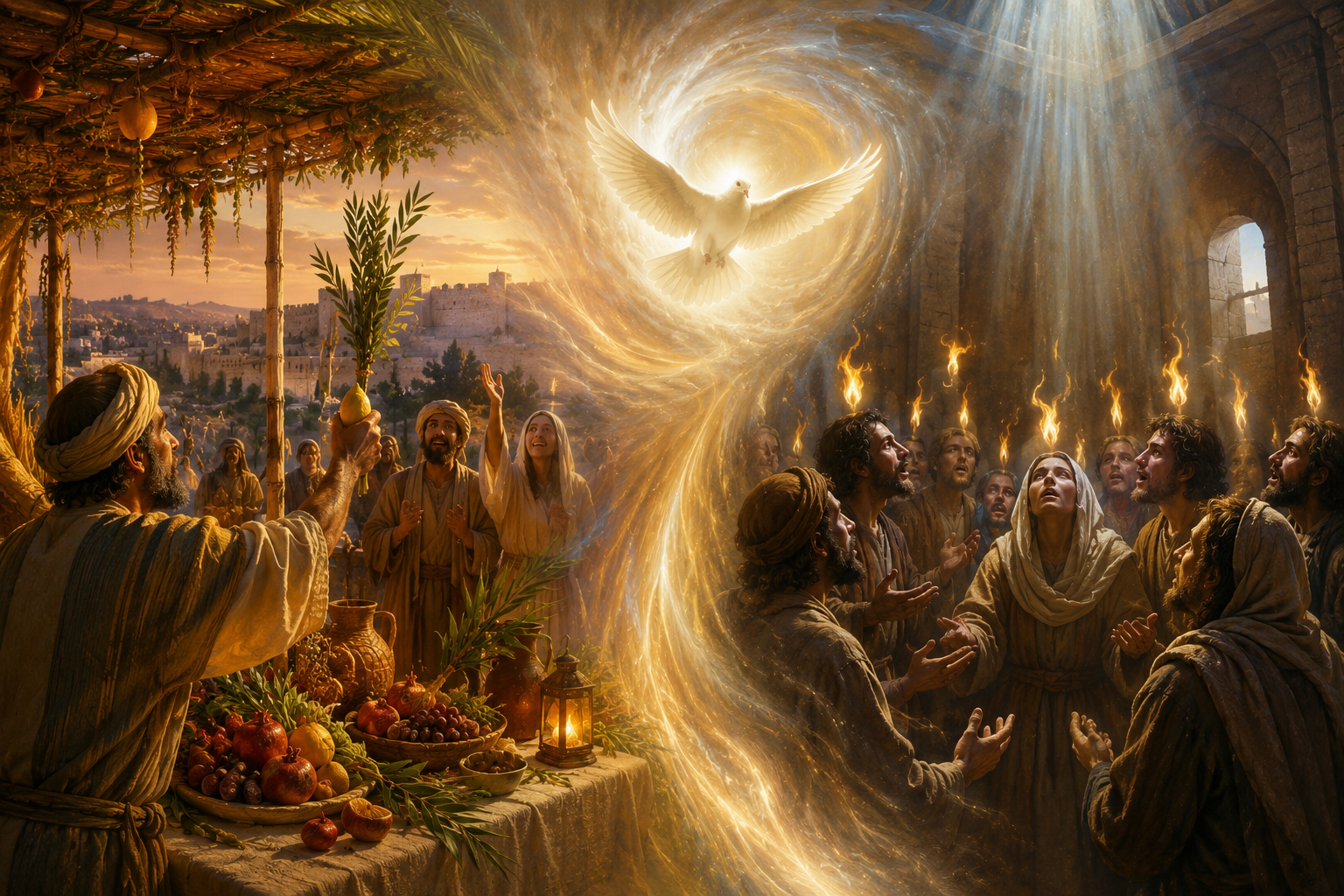
The connection between Jesus' declaration at the Feast of Tabernacles and the outpouring of the Holy Spirit at Pentecost reveals a beautiful tapestry of God's plan for redemption. Understanding this connection helps us grasp how the Spirit works in our lives today and why we matter to God. What Was the Feast of Tabernacles? The Feast of Tabernacles, also called the Feast of Booths or Sukkot, was one of three major Jewish festivals alongside Passover and Pentecost. This fall celebration drew enormous crowds to Jerusalem, perhaps even more than Passover itself. During this seven-day festival, people lived in temporary structures - tents or booths - commemorating when the Israelites wandered in the wilderness and God dwelt among them in the tabernacle. It was both a harvest celebration and a powerful reminder of God's presence with His people. The Symbolism of God's Presence The feast pointed directly to the coming Messiah. Just as God had been present with Israel in a pillar of fire by night and cloud by day over the tabernacle, this celebration looked forward to when God would dwell permanently with His people. When Solomon built the temple, he chose to dedicate it during the Feast of Tabernacles, symbolizing the transition from God's temporary dwelling to His permanent presence. What Happened During the Water Ceremony? Each day of the festival included a remarkable water ceremony. Priests would gather at the Pool of Siloam with golden vessels, fill them with water, and process through the Water Gate into Jerusalem. The crowds would wave branches of myrtle, willow, and palm trees, shouting and blowing ram's horns in celebration. At the temple altar, priests would pour water into one silver basin and wine into another, letting them flow together. This ceremony commemorated when Moses struck the rock at Mount Horeb, bringing forth living water for the thirsty Israelites in the wilderness. Jesus' Bold Declaration On the last day of this festival, as the water ceremony reached its climax, Jesus stood up and made a stunning proclamation: "'If anyone thirsts, let him come to me and drink. Whoever believes in me, as the Scripture has said, 'Out of his heart will flow rivers of living water.'" - John 7:37-38 (ESV) This wasn't just about physical thirst. Jesus was addressing the deeper human need for significance and value. He was saying, "If you feel insignificant, if you feel worthless, come to me. I am the living water that will quench your deepest thirst." How Does This Connect to Pentecost? Jesus explained that this living water referred to the Holy Spirit, whom believers would receive after His glorification. The promise made at the Feast of Tabernacles was fulfilled at Pentecost, exactly 50 days after Passover. When the disciples gathered in Jerusalem for Pentecost, wind and fire swept through the room. Tongues of fire appeared above their heads, and they spoke in various languages, proclaiming God's mighty works to people from every nation. Reversing the Tower of Babel This outpouring of the Spirit reversed what happened at the Tower of Babel. Where God had once scattered people by confusing their languages due to their pride, now He was bringing them together through the Spirit. People from different nations heard the gospel in their own languages, understanding God's message of redemption. Why Do We Matter to God? The connection between these festivals reveals a profound truth about human significance. Research shows that people fundamentally need two things: to know they matter to someone and to feel they're providing value to others. Jesus addresses both needs. At the Feast of Tabernacles, He declared that we matter to Him - we have significance because we're loved by the Creator of the universe. Through the Holy Spirit given at Pentecost, we're empowered to matter to others and provide value through our various callings in life. The Fruit of the Spirit in Daily Life When the Holy Spirit dwells in us, He produces fruit: "love, joy, peace, patience, kindness, goodness, faithfulness, gentleness, and self-control" - Galatians 5:22-23 (ESV). These qualities flow from us like rivers of living water, blessing others and demonstrating our significance in God's kingdom. We might feel inadequate to display all these qualities, but that's precisely why we need the Spirit's power. He enables us to love when love is difficult, to show patience when we're frustrated, and to demonstrate kindness when others are unkind. What About When We Feel Insignificant? Sometimes we struggle with feelings of worthlessness, especially during difficult seasons of life. We might think we're not accomplishing anything meaningful or that we don't really matter anymore. The truth is that as long as we can pray, we can make a difference. Prayer matters because it connects us to the God who matters supremely. Even from a hospital bed or in the midst of limitations, we can intercede for others and participate in God's work through the Spirit. Life Application This week, remember that you matter to Christ as the living water who quenches your deepest thirst for significance. Through the Holy Spirit, you're called to help others recognize their value too. Look for opportunities to demonstrate the fruit of the Spirit in your daily interactions. Consider these questions as you reflect on this truth: In what areas of your life do you struggle with feelings of insignificance, and how can you bring those to Jesus as the living water? How can you help someone else this week recognize that they matter both to Christ and to you? What specific fruit of the Spirit do you need the Holy Spirit's help to develop more fully in your relationships? How might God be calling you to provide value to others through your current circumstances, even if they feel limiting? The same Spirit who empowered the disciples at Pentecost dwells in you today. You matter to God, and through His Spirit, you can matter significantly to others as rivers of living water flow from your heart.
May 17, 2026 • 5 Minute Read
Understanding Christ's Ascension: From Agony to Joy
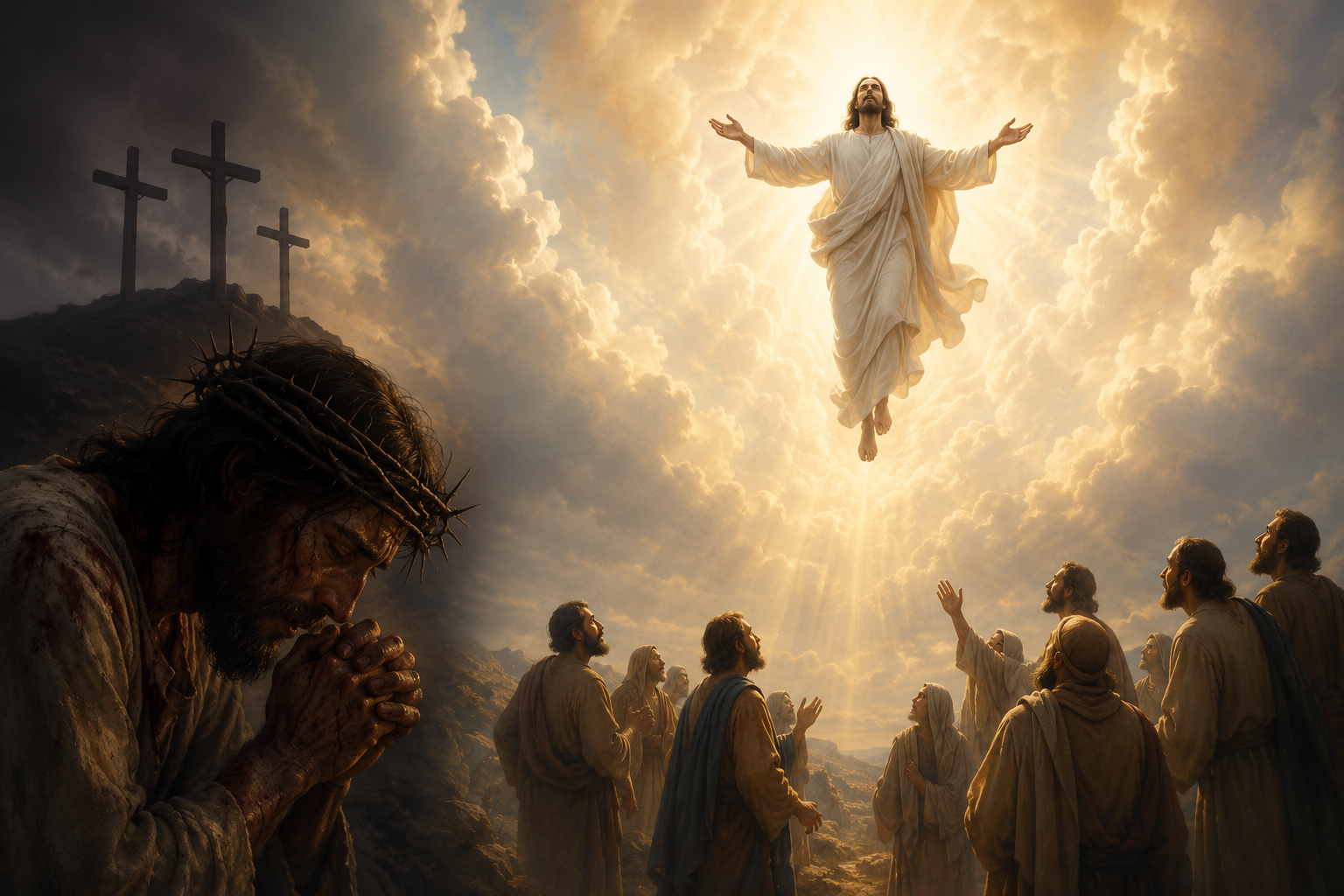
The ascension of Jesus Christ presents us with powerful contrasts that reveal profound truths about our faith. Through examining both Luke's Gospel and the Book of Acts, we discover how Christ's departure actually enables our mission and transforms our perspective from fear to joy. Why Did Jesus Leave? The Purpose Behind the Ascension He Left So We Could Be Sent Christ's ascension wasn't an abandonment—it was an empowerment. Before ascending, Jesus told his disciples: "But you will receive power when the Holy Spirit has come upon you, and you will be my witnesses in Jerusalem and in all Judea and Samaria, and to the end of the earth" (Acts 1:8 ESV). The ascension represents a beautiful paradox: Jesus physically departed so that he could spiritually empower his followers for worldwide ministry. His leaving enabled the coming of the Holy Spirit, who would equip the disciples for their mission. From Earth to Heaven: A Strategic Position In his birth, Christ came to us in the flesh to be with us. In his ascension, he was carried up to heaven in that same flesh to be there for us, ruling over the entire world from the position of ultimate authority at the Father's right hand. This means Jesus didn't abandon his humanity when he ascended. He remains fully God and fully man, interceding for us from heaven in his glorified but real physical body. What Was Christ's Resurrected Body Like? Unique Characteristics of the Resurrection Body Christ's post-resurrection body was remarkable in its unique properties. He could show the wounds in his hands and side to his disciples, demonstrating his physical reality. Yet this same body could walk through locked doors and walls. Sometimes the disciples didn't even recognize him initially, only to suddenly realize "it is the Lord." This gives us a glimpse of what our own resurrection bodies might be like—real and physical, yet transformed and glorified. How Did the Disciples React to the Ascension? From Fear and Confusion to Understanding Despite Jesus telling them three times that he would die and rise again, the disciples didn't understand until after it happened. Even then, they locked themselves in rooms out of fear of persecution. Yet Jesus consistently greeted them with "Peace be with you"—words that became central to Christian liturgy. This greeting preceded every meal he shared with them, establishing the pattern of peace before feast that we follow in communion today. The Blessing Before Departure As Jesus prepared to ascend, Luke tells us he blessed his disciples. This wasn't just a casual farewell—it was a powerful blessing from the risen Christ that embedded peace in their hearts and prepared them for their mission. The disciples' transformation was complete: "And they worshiped him and returned to Jerusalem with great joy, and were continually in the temple blessing God" (Luke 24:52-53 ESV). What Can We Learn from the Angels' Message? The Promise of Return When the disciples stood gazing up into heaven after Jesus ascended, two angels appeared and asked: "Men of Galilee, why do you stand looking into heaven? This Jesus, who was taken up from you into heaven, will come in the same way as you saw him go into heaven" (Acts 1:11 ESV). This promise assures us that Christ's ascension isn't permanent separation—it's temporary positioning for his ultimate return. How Should We Respond to Christ's Ascension Today? Three Possible Reactions When facing challenges in the church today—declining attendance, shortages of pastors and teachers, cultural opposition—we might respond with: Desperation: Feeling lost without Christ's physical presence, grieving like the disciples initially did. Resignation: Adopting a passive attitude, assuming God will handle everything without our participation. Joy and Anticipation: The proper response, recognizing that Christ's ascension empowers our mission and guarantees his return. Christ's Continued Presence Though ascended, Jesus remains present with us. He is omniscient (all-knowing), omnipotent (all-powerful), and omnipresent (present everywhere). When two or three gather in his name, he is there in their midst. We experience this presence especially in communion, where we celebrate his body and blood in, with, and under the bread and wine—continuing the pattern of peace and table fellowship he established with his disciples. What Is Our Mission After the Ascension? Witnessing with Joy Our response to Christ's ascension should be active witness—not with apathy or fear, but with joy. We share his hope through: Worshiping together in fellowship, not just watching services online when avoidable Studying God's Word to receive confidence in our forgiveness and salvation Supporting one another through life's challenges and celebrations Witnessing through our words, actions, and deeds The Promise of His Return Christ will return "in the same way" he left—physically and visibly. Revelation depicts him coming on a white horse with an army of angels, wearing a robe splattered with the blood of the Lamb, ready to establish his kingdom on a new earth with his people. Life Application This week, choose joy and anticipation over fear and resignation. Christ's ascension wasn't his departure from your life—it was his strategic positioning to empower your mission. He sits at the Father's right hand, fully present through his Spirit, interceding for you and working through you. Challenge yourself this week: Instead of worrying about the state of the church or feeling helpless about cultural changes, actively participate in Christ's mission. Worship with fellow believers, study God's Word, and look for opportunities to witness through your words and actions. Questions for reflection: Am I responding to current challenges with fear, resignation, or joy and anticipation? How can I actively participate in Christ's mission rather than passively waiting? What specific ways can I witness to others about the hope I have in the ascended Christ? How does knowing Christ is physically present in heaven, interceding for me, change my daily perspective? Remember: Christ left so you could be sent. His ascension empowers your mission and guarantees his return. Live with the joy and anticipation that comes from knowing your ascended Savior is both with you now and coming again.
May 11, 2026 • 6 Minute Read
What Does It Mean That Jesus Descended Into Hell?
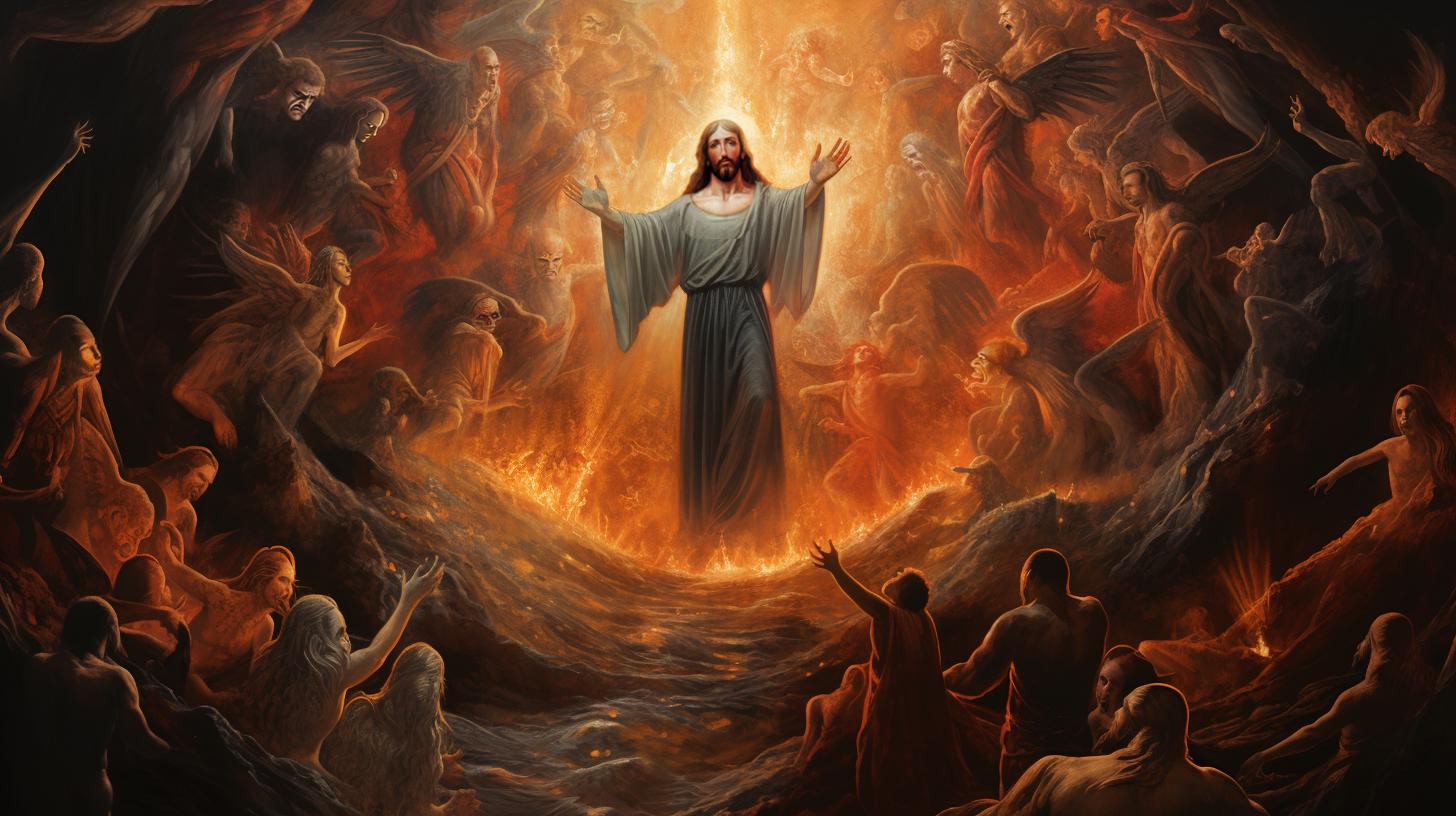
Every Sunday, Christians around the world recite the Apostles' Creed, declaring their belief that Jesus "descended into hell." Yet this phrase often leaves believers puzzled. What exactly happened when Christ descended into hell, and why does it matter for our faith today? The Mystery in Scripture The concept of Christ's descent into hell appears most clearly in 1 Peter 3:18-20:"For Christ also suffered once for sins, the righteous for the unrighteous, that he might bring us to God, being put to death in the flesh but made alive in the spirit, in which he went and proclaimed to the spirits in prison, because they formerly did not obey, when God's patience waited in the days of Noah, while the ark was being prepared" - 1 Peter 3:18-20 (ESV). This passage has puzzled theologians for centuries. Even Martin Luther, the great reformer who translated the entire Bible, admitted his struggle with this text. In his commentary, Luther wrote: "This is a strange text, certainly a more obscure passage than any other passage in the New Testament. I still did not know for sure what the apostle even means." How Has the Church Understood This Throughout History? Early Church Interpretations Throughout church history, Christians have offered various interpretations of Christ's descent into hell: The Harrowing of Hell (12th Century): Early artwork depicted Christ descending to rescue Old Testament believers who were supposedly trapped under hell's gates until his arrival. Descent into Limbo (Medieval Period): Some believed Christ descended to free souls stuck in an intermediate state between heaven and hell. Preaching to Spirits: Another view suggested Christ offered a second chance of salvation to those who had died. Luther's Simple Approach By 1533, Luther had developed a clearer understanding. Rather than getting lost in complex theological debates, he advocated for a simple interpretation. In his sermon at Torgau Castle, Luther explained that Christ descended into hell not to rescue souls or offer second chances, but to proclaim his victory over Satan and all evil forces. Luther emphasized: "I want to stick with the simplest understanding, what the words mean, how one would describe it to children and to the simple-minded... the surest thing of all is whoever wishes to keep from veering off the straight path, let him stick to the words and imagine them for himself in the simplest way as he can." What Does Christ's Victory Mean? A Declaration of Conquest When Christ descended into hell, he wasn't going there as a prisoner or victim. He went as the conquering King to declare his absolute victory over Satan, death, and all evil powers. This wasn't about rescuing souls already condemned, but about proclaiming that the battle was won. The Connection to Noah's Flood The passage in 1 Peter draws a parallel between Noah's time and Christ's victory. Just as God pronounced judgment on the corrupt world through the flood while saving Noah's faithful family, Christ's descent into hell was a pronouncement of final judgment on the rebellious spirits who had opposed God. The eight people saved in Noah's ark represent God's faithful remnant, while the flood represents both judgment and cleansing - much like baptism washes away our sins through Christ's victory. What Scripture Says About Christ's Victory Several passages support this understanding of Christ's triumphant descent: "He disarmed the rulers and authorities and put them to open shame, by triumphing over them in him" - Colossians 2:15 (ESV). "I died, and behold I am alive forevermore, and I have the keys of Death and Hades" - Revelation 1:18 (ESV). "Therefore God has highly exalted him and bestowed on him the name that is above every name, so that at the name of Jesus every knee should bow, in heaven and on earth and under the earth" - Philippians 2:9-10 (ESV). Why This Matters for Christians Today Complete Security in ChristChrist's descent into hell assures us that his victory is total and complete. There is no power in heaven, on earth, or under the earth that can separate us from God's love. As Paul writes: "For I am sure that neither death nor life, nor angels nor rulers, nor things present nor things to come, nor powers, nor height nor depth, nor anything else in all creation, will be able to separate us from the love of God in Christ Jesus our Lord" - Romans 8:38-39 (ESV). Confidence in Sharing Our Faith Because Christ has conquered every opposing force, we can share our faith with confidence. Peter encourages us: "But in your hearts honor Christ the Lord as holy, always being prepared to make a defense to anyone who asks you for a reason for the hope that is in you; yet do it with gentleness and respect" - 1 Peter 3:15 (ESV) Notice the emphasis on gentleness and respect. We don't need to be aggressive or harsh when sharing the gospel because the victory is already won. We can approach others with the same grace Christ showed us. Life Application Christ's descent into hell reminds us that no situation in our lives is beyond his power and authority. When we face overwhelming circumstances, remember that our Savior has already conquered the ultimate enemies - sin, death, and Satan himself. This week, let this truth transform how you approach challenges and how you interact with others. Since Christ has won the ultimate victory, you can face difficulties with confidence and share your faith with gentleness rather than defensiveness. Ask yourself these questions: Am I living with the confidence that comes from knowing Christ has already won the ultimate victory? When I share my faith with others, do I do so with gentleness and respect, trusting in Christ's power rather than my own arguments? How can I better reflect the security I have in Christ's complete triumph over all opposing forces? Christ descended, proclaimed victory, and prevailed. Because of this, our hope in him as our Redeemer is secure forever. No power can snatch us from his hands, and no force can separate us from his love.
July 16, 2024 • 4 Minute Read
Amos: A Prophet for Today's Busy World
In our fast-paced lives, it is easy to become overwhelmed with activities and distractions, making it difficult to hear God's voice. This challenge is not new; even in the time of Amos, the Israelites were distracted by their own prosperity and political stability, leading them away from God. Amos, a simple shepherd, was called by God to deliver a stern message to the Northern Kingdom of Israel, warning them of their spiritual complacency and impending judgment. Amos used the plumb line metaphor to illustrate how far the Israelites had strayed from God's standards. Just as a plumb line reveals whether a wall is straight, God's Word reveals the crookedness of our lives. The Israelites had built temples to false gods and trusted in their own achievements rather than in God. Amos' message was clear: true victory and prosperity come from God alone, and ignoring His Word leads to destruction. Our culture today mirrors that of ancient Israel. We are bombarded with distractions and false voices, from social media to non-stop news, which drown out God's Word. We must make a conscious effort to listen to what God is saying to us. Listening goes beyond hearing; it involves responding and living out God's commands in our daily lives. Through baptism, we are called to renounce the devil and his ways, but this renunciation must be evident in how we live. God's Word is not just to be heard but to be acted upon. The Holy Spirit works through the Word to lead us to repentance and transformation. As we partake in the Eucharist, we are reminded of the forgiveness of sins and the call to live out our faith. In a world filled with noise and distractions, we must prioritize listening to God's voice, allowing it to guide and shape our lives. **The Danger of Busyness**: Our lives are filled with activities and distractions that can drown out God's voice. This busyness can prevent us from confronting our own spiritual shortcomings and idols. We must intentionally create space to listen to God amidst the noise. The Plumb Line of God's Word: Just as a plumb line reveals the straightness of a wall, God's Word reveals the crookedness of our lives. Amos used this metaphor to show the Israelites how far they had strayed from God's standards. We must regularly measure our lives against God's Word to ensure we are aligned with His will, for this alignment is the key to a righteous life. **True Prosperity Comes from God**: The Israelites trusted in their political and economic achievements, but Amos reminded them that true victory and prosperity come from God alone. Earthly success is not a sign of God's favor if our hearts are far from Him. We must place our trust in God rather than in our own accomplishments. **Listening vs. Hearing**: Hearing God's Word is not enough; we must listen and respond. Listening involves acting on what we hear and allowing it to transform our lives. This distinction is crucial in our spiritual journey, as it determines whether we are merely hearers or doers of the Word. The Role of the Holy Spirit: The Holy Spirit, a constant companion in our spiritual journey, works through God's Word to lead us to repentance and transformation. As we engage with the Scriptures and partake in the sacraments, the Spirit renews our hearts and minds. We must be open to the Spirit's work, allowing it to guide us in living out our faith. In a world filled with distractions, Amos's message remains relevant. We must prioritize listening to God's voice, allowing it to guide and shape our lives. True prosperity and victory come from God alone; through His Word and the work of the Holy Spirit, we find transformation and renewal.
Currently Reading
May 7, 2026 • 6 Minute Read
The Witness of Stephen: Following Christ Even in Opposition
Stephen's story from Acts 6-7 offers a powerful example of faithful witness in the face of persecution. His martyrdom wasn't just an ending—it was the culmination of a life dedicated to serving others and boldly proclaiming the truth about Jesus Christ. How Did Stephen Begin His Ministry? Stephen didn't start as a preacher or theologian. He was chosen for a practical need: serving widows in the early church. The twelve apostles were overwhelmed with the growing congregation's needs, particularly food distribution to widows in their community. They appointed seven men, including Stephen, to handle this vital service. But God had bigger plans. Through Stephen's faithful service in this seemingly simple role, God worked "great signs and wonders among the people." This demonstrates how God uses our everyday vocations—whether serving meals, teaching children, or working in an office—to accomplish His purposes. What Made Stephen's Defense So Powerful? When Stephen was brought before the Sanhedrin (the Jewish Supreme Court), he faced the same false accusations that Jesus had encountered. They accused him of blasphemy and speaking against Moses and the prophets. But Stephen, filled with the Holy Spirit, delivered a masterful defense that his opponents couldn't refute. Stephen's Historical Journey Through Scripture Stephen's sermon took his accusers on a journey through Jewish history, showing a consistent pattern: Abraham's Call: He reminded them that their father Abraham was originally a pagan from Ur of the Chaldeans (modern-day Iraq). God called him out of paganism to follow Him, making Abraham a sojourner who trusted God's promises without seeing their fulfillment. Joseph's Story: Stephen recounted how Joseph's brothers, driven by jealousy, sold him into slavery. Yet God was with Joseph, elevating him to second-in-command in Egypt. When famine struck, Joseph's brothers came seeking help, and Joseph forgave them—foreshadowing the forgiveness Christ offers. Moses the Deliverer: Stephen described how God raised up Moses to deliver His people from Egyptian bondage. Yet even after witnessing miraculous signs and wonders, the Israelites rejected Moses and created a golden calf while he received the law on Mount Sinai. The Pattern of Rejection Through this historical narrative, Stephen revealed a troubling pattern: God repeatedly delivered His people, yet they consistently rejected Him and His messengers. The prophets who called them to repentance were persecuted. The kings who tried to lead them back to God were opposed. Why Did Stephen's Message Provoke Such Anger? Stephen concluded his defense with a direct challenge: "You stiff-necked people, uncircumcised in heart and ears, you always resist the Holy Spirit, as your fathers did, so do you. Which of the prophets did your fathers not persecute? And they killed those who announced beforehand the coming of the Righteous One, whom you have now betrayed and murdered." This wasn't just a history lesson—it was an indictment. Stephen was telling them they were following the same pattern of rejection that had characterized their ancestors. They had rejected the ultimate Prophet, the Messiah Himself. How Did Stephen Face Death? The crowd's response was immediate and violent. They ground their teeth in rage and began stoning Stephen. But in his final moments, something remarkable happened. Stephen looked up and saw a vision of Christ standing at the right hand of God. This vision of the risen, glorified Christ gave him strength to face death with grace. Most significantly, as the stones struck him, Stephen prayed, "Lord, do not hold this sin against them." This prayer echoes Jesus' words from the cross: "Father, forgive them, for they know not what they do" (Luke 23:34 ESV). Even in his agony, Stephen demonstrated the transforming power of Christ's love. What Can We Learn About Witnessing for Christ? Stephen's example teaches us several crucial lessons about Christian witness: Faithfulness in Small Things: Stephen started by serving widows. God used his faithfulness in this practical ministry to prepare him for greater service. The Power of the Holy Spirit: When confronted by learned opponents, Stephen didn't rely on his own wisdom. The Holy Spirit gave him words that confounded his accusers. Courage in Opposition: Stephen didn't soften his message when facing a hostile audience. He spoke truth even when it cost him his life. Forgiveness for Enemies: Perhaps most challenging of all, Stephen prayed for those who were killing him. This supernatural response could only come from someone filled with Christ's love. Who Was Watching Stephen's Martyrdom? Among the crowd that day was a young man named Saul, holding the garments of those who stoned Stephen. This same Saul would later encounter the risen Christ on the road to Damascus and become the apostle Paul. Stephen's faithful witness, even unto death, planted seeds that would bear fruit in one of Christianity's greatest missionaries. What Does This Mean for Modern Christians? Stephen's story isn't just ancient history—it's a call to faithful witness in our own time. We may not face literal stoning, but we will encounter opposition when we stand for Christ's truth. The question is: will we respond with Stephen's courage and grace? Christ calls us to be witnesses in every role we fill—as parents, employees, neighbors, and church members. We don't need to deliver eloquent sermons like Stephen, but we can share the simple truth: "Christ died for me and everything I had done wrong, and He will do the same for you." Life Application This week, ask yourself: Am I faithfully serving Christ in the "small" roles He's given me? Stephen's ministry began with serving widows, but God used that faithfulness to prepare him for greater witness. Whether you're changing diapers, working at a desk, or teaching a class, God can use your faithful service as a platform for witness. Consider these questions as you reflect on Stephen's example: When faced with opposition to my faith, do I respond with grace or defensiveness? Am I prepared to share the simple truth of what Christ has done for me? Can I pray for those who oppose or mistreat me, as Stephen did for his executioners? How is God calling me to be a witness in my current circumstances, even if they seem ordinary? Stephen's witness reminds us that following Christ may be costly, but it's always worth it. The risen Christ who gave Stephen strength to face martyrdom is the same Christ who empowers us to live faithfully today.